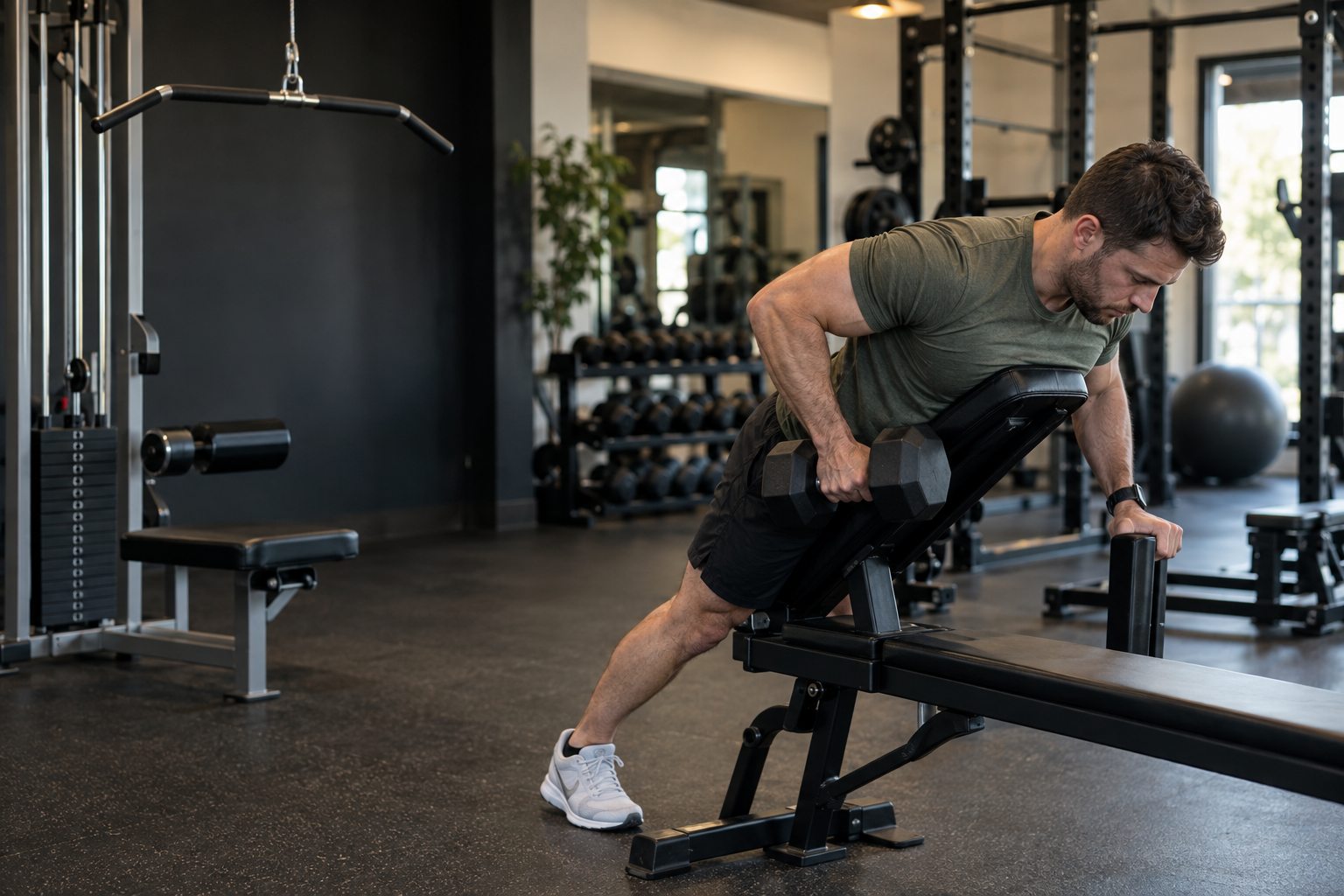
Beginner gym advice tends to arrive as a fight. One camp says machines are the safe, sensible way to start. The other says free weights are the only real way to train. Standing in a gym full of both, it is easy to feel like you have to choose a team before your first workout.
You do not. Machines and free weights are different tools, each with real strengths, and most people end up using both. This article compares them fairly and gives you a practical way to decide, exercise by exercise. It is general education, not personal advice, and a qualified coach can help you choose equipment for your situation.
You Do Not Have to Pick a Side
The question of machines versus free weights sounds like a contest, but the useful version is more modest: which tool helps me perform this exercise well today? A machine might be the right choice for one movement and a set of dumbbells for the next.
Thinking this way removes pressure. You are not declaring an identity; you are just choosing equipment for a job.
Why Machines Can Be Beginner-Friendly
Many machines have a guided path, clear seat and pad adjustments, and instructions printed on them. That can make it easier to feel the target muscle and to repeat the same movement each session. Setup is often as simple as adjusting a seat and selecting a weight with a pin.
Machines can also feel less intimidating, since you do not need to balance or carefully position weights. If a machine looks confusing, take a moment to read its diagram, and ask a staff member if you need help. Our first week at the gym guide covers how to approach an unfamiliar floor.
Machines are not perfect for everyone, though. They are built around an average body, so a seat, pad, or lever may not line up comfortably with yours. Adjust what can be adjusted, and if a machine still feels awkward or pinches, skip it and choose another exercise. A movement should feel controlled and comfortable, not forced into a shape that does not fit.
Why Free Weights Are Useful
Dumbbells, barbells, and kettlebells allow a wide variety of movements and let you train in ways that feel closer to everyday activity. They are flexible, they let you adjust your position, and many gyms have plenty of them. Free weights also work well at home.
They ask more of your coordination because you control the path of the weight yourself. That is part of what makes them useful, and it is also why technique and starting light matter.
Stability Changes the Experience
With a machine, the equipment supplies much of the stability, so you can concentrate on pushing or pulling. With free weights, your body helps stabilize the load, so the same effort can feel more demanding and more variable from rep to rep.
- Machines: guided path, simple adjustment, easier to repeat.
- Free weights: more freedom of movement, more balance and coordination required.
Neither is better in every situation. They simply ask different things of you.
Learning Technique
Beginners often learn best by starting with simpler movements and adding complexity gradually. A machine chest press or leg press can teach the basic pushing pattern with less to think about, while a goblet squat or dumbbell row teaches you to control your own body position.
Whichever you use, keep the movement controlled, choose a weight you can handle, and check technique. The exercise library in FitForgeFlow includes instructions and form cues for many exercises, which can help as you learn.
Progressing Either Option
You can progress on both. On machines, you usually move the pin to a heavier weight or add repetitions. With free weights, you pick up heavier dumbbells, add plates, or add repetitions.
Because machine stacks and dumbbell racks change in different-sized steps, the increases can feel different. Our guide on how much weight a beginner should lift explains how to choose a manageable load and increase it gradually, whichever equipment you use.
Use What Your Gym Has
Gyms differ. Some have huge machine floors and only a small dumbbell area, while others are the reverse. Some have equipment you have never seen. The best plan works with what you actually have access to, rather than an ideal setup.
If the equipment you planned to use is taken, that is normal. Flexible thinking, like the ideas in how to feel less lost at the gym, keeps your workout moving.
Mix Them in the Same Workout
There is no rule against combining equipment. A workout might start with a barbell or dumbbell movement, continue with a machine, and finish with a cable exercise. Choosing each exercise based on what works well for you is perfectly reasonable.
A mix also helps in a busy gym. If the dumbbells are crowded, a machine can keep you moving, and if the machines are taken, free weights may be available.
Choose Based on the Exercise
Some exercises translate very well to machines, such as leg presses, chest presses, and lat pulldowns. Others are more naturally performed with free weights, like dumbbell rows or goblet squats. Some exercises can be done either way.
- Often machine-friendly: leg press, seated chest press, lat pulldown, leg curl.
- Often free-weight-friendly: goblet squat, dumbbell row, dumbbell shoulder press, Romanian deadlift.
- Flexible either way: rows, presses, and many arm exercises.
Ask three quick questions: Can I set this up confidently? Can I control the movement? Does it target what I want? If the answer is yes, it is a reasonable choice.
The Best Tool Is One You Can Use Well
The right equipment is the equipment you can use with good technique, confidence, and consistency. Trying different options over time will help you learn what works for your body and your gym.
If you are ever unsure how to use a machine or lift, ask a qualified staff member or coach. Start where you feel comfortable, learn gradually, and let your comfort grow with experience.