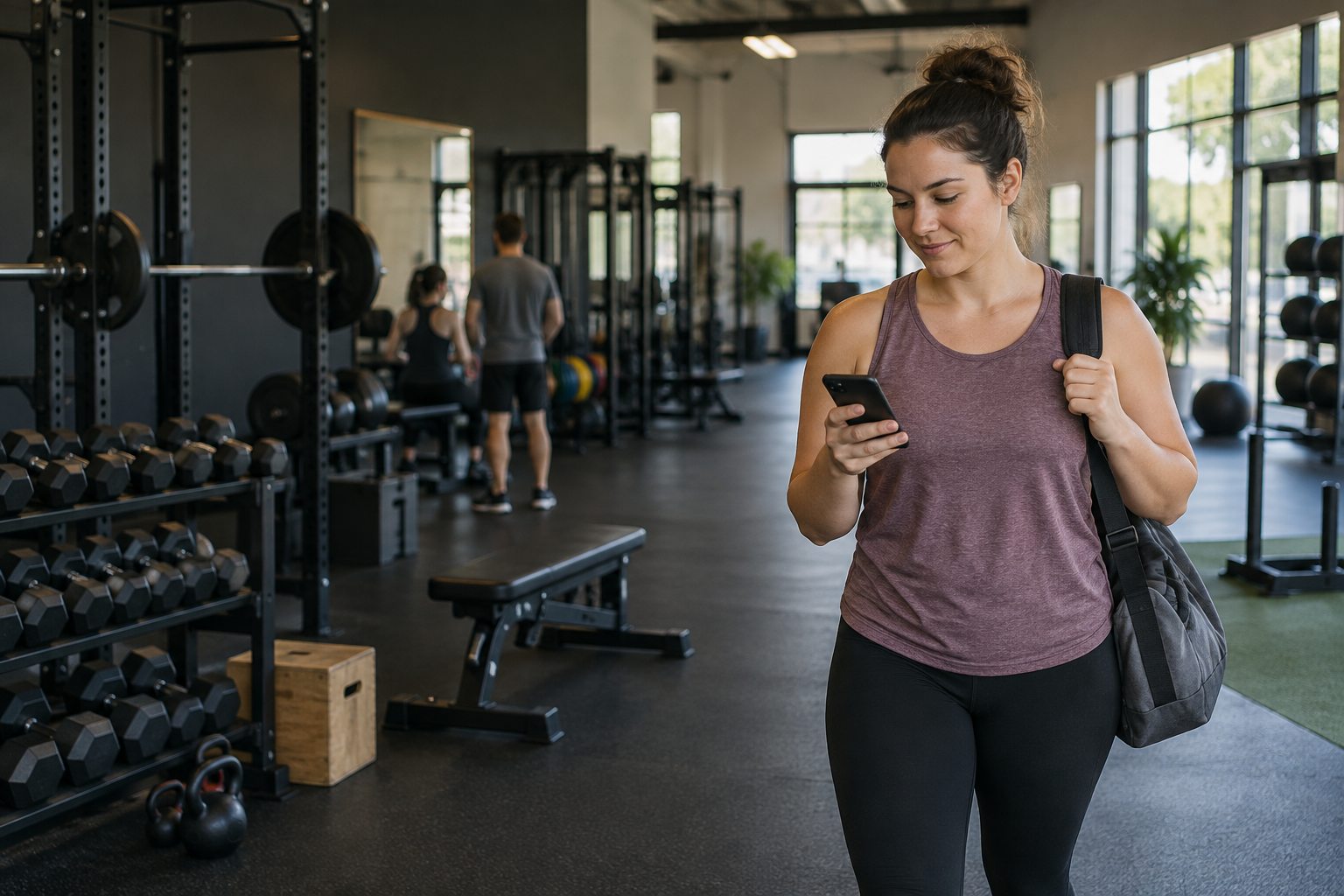
Confidence starts with one clear plan, not complete knowledge
Feeling Lost Is Common
A gym can present dozens of machines, unfamiliar movements, and people who appear to know exactly where they are going. Feeling lost in that environment is usually evidence of uncertainty, not a lack of ability.
You do not need to solve the entire building on the first visit. A useful goal is to know what you will do for the next thirty to sixty minutes and where the first movement happens.
Know the Plan Before You Walk In
Choose a workout before arriving and read the exercise list. Check the approximate duration, equipment, and first two movements. A premade beginner workout can carry decisions that are difficult to make while standing in a busy room.
If you want a simple starting process, read How FitForgeFlow Works. The plan does not need to be perfect; it needs to be clear enough to begin.
Learn One Area at a Time
Start in a small area such as selectorized machines, a dumbbell bench, or a quiet functional space. Learn how to adjust one or two pieces of equipment and where weights are returned.
Familiarity grows faster when the environment is limited. Once that area feels predictable, add another section on a later visit instead of wandering through everything at once.
You Do Not Need Every Machine
Most useful workouts rely on a modest number of movement patterns. You can train without knowing every machine, attachment, or specialty station in the room.
Choose equipment that you understand and can use with control. Ask qualified staff for setup help when appropriate. Learning one safe movement well is more useful than collecting ten exercises you cannot repeat confidently.
What to Do When Equipment Is Taken
Crowded equipment does not mean the session is ruined. Check for a curated alternative that preserves the movement and purpose, change the exercise order when sensible, or complete another planned movement and return later.
Avoid replacing an exercise with something unrelated simply because it is open. FitForgeFlow substitutions and workout navigation are meant to keep the plan flexible without turning it into random activity.
Stop Trying to Look Experienced
Rushing, using excessive weight, or pretending to understand equipment can make training less safe and more stressful. Experienced gym members also read instructions, adjust machines, and ask questions.
Move deliberately. Use a manageable load. Give yourself time to set up. Looking calm is less important than knowing why you are doing the next exercise.
Use Repetition to Build Familiarity
Repeat a suitable workout before constantly searching for a new one. On the second visit you know where the equipment is. On the third, you remember the setup and can focus more on technique.
Repetition creates useful evidence: how long the session takes, what resistance you used, and which alternative worked. That information makes the next visit easier.
Let the App Carry Some Decisions
A useful app can hold the workout order, sets, repetitions, rest, and notes so you do not have to remember them under pressure. Review the plan, follow the next step, and record what will help later.
The phone should support the session rather than become another source of searching. What Do I Do at the Gym? explains how to turn that structure into a first practical visit.
Confidence Usually Comes After Action
Waiting to feel fully confident before entering the gym can keep confidence permanently out of reach. Familiarity usually develops after several manageable visits.
Choose one plan, one starting area, and one first exercise. Complete the session you intended, then save what worked. Confidence is not knowing everything; it is knowing you can find the next step.
A Simple Plan for the Next Visit
Before the next visit, choose one workout and take a screenshot or save it in the app. Identify the first station and one backup. Pack the basic items you need so preparation does not continue in the parking lot.
When you enter, go directly to the first area. Spend a few minutes warming up, then begin with a resistance that feels manageable. Do not add exercises because someone nearby is doing them.
If you cannot find equipment, ask staff where it is or use the planned alternative. A clear question is more efficient than wandering while pretending to search for something else.
After the session, record what you used and one thing that felt easier than expected. Save the workout if it fit. Schedule the next visit while the details are still fresh.
This process gives confidence something concrete to grow from: a completed plan, familiar equipment, and a visible next step.
Your Next Visit Will Feel Easier
Schedule the next workout before the current week ends. Reuse the same starting area and adjust only what needs to change.
Your first visit may still feel awkward. The next one usually contains fewer unknowns. For a complete first-week approach, use Your First Week at the Gym as a flexible roadmap.