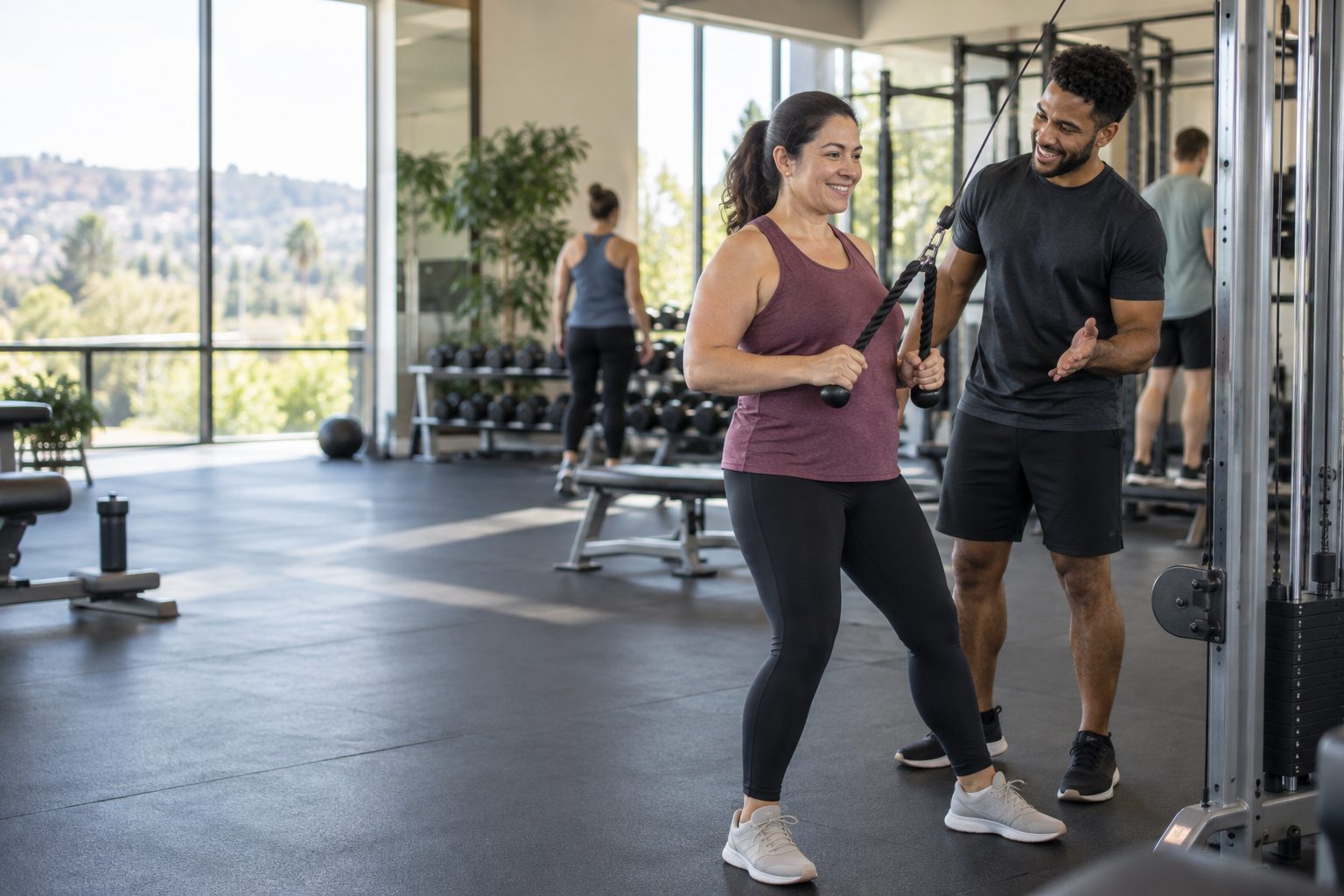
A calm, practical way to learn the space and build a reason to return
Your First Week Is Not a Test
The first week at a gym can feel like everyone else received instructions you missed. They did not. Most people learned the room, the equipment, and their preferences gradually.
Your job is not to prove that you belong. It is to create a manageable first experience and return. The sample week below is an option, not an individualized prescription. Adjust it for your schedule, health, and qualified guidance.
Before Day One
Choose a time when you are less rushed. Pack comfortable clothing, water, and anything your facility requires. Review the gym's orientation options and basic policies.
Pick a beginner workout before leaving home. Read the exercise list and identify any machines you may need to locate. That small preview makes the room feel less unfamiliar.
Day One: Learn and Move
Walk through the facility and find the changing area, water, cardio equipment, machines, and free weights. Ask staff how to adjust a machine if you are unsure. That is a normal question.
Then complete an easy full-body session or a few basic movements with controlled technique. Leave energy in reserve. The purpose of day one is learning, not exhaustion.
What Weight Should You Use?
Start lighter than your ego suggests. Choose resistance you can control through the intended range while keeping several good repetitions in reserve. Technique should remain steady from the beginning to the end of the set.
There is no universal starting number. Equipment differs, bodies differ, and experience differs. Increase gradually only after the movement feels controlled.
Day Two: Rest, Walk, or Recover
You may feel unfamiliar soreness. Gentle movement, normal daily activity, food, hydration, and sleep can support recovery. You do not need to test every sore muscle.
Severe pain, unusual symptoms, or a health concern is not a challenge to push through. Seek appropriate medical or professional guidance.
Your Second Workout
On day three or another suitable day, repeat the same manageable session or choose a comparable beginner workout. Repetition lets you spend less attention finding equipment and more attention learning technique.
Notice what felt confusing and ask a staff member or qualified trainer for help. One useful answer can remove a large amount of uncertainty.
Rest Days Count
A beginner schedule does not need to fill every day. Training creates a stimulus; recovery is part of adapting to it. A rest day can be a walk, light mobility, or simply normal life.
A sample first week might include three spaced training days and recovery between them. Some people need fewer. The right frequency is one you can recover from and repeat.
Do Not Chase Soreness
Soreness is not a score. A productive workout can leave you feeling capable rather than destroyed. Chasing the most painful possible session often makes the next visit less appealing.
Focus on controlled repetitions, reasonable effort, and finishing with enough confidence to come back.
What to Write Down
Record the exercise, weight or resistance, completed sets and reps, and one short note if useful. You might note that a machine adjustment worked well or that a weight felt too heavy.
This record gives your next session a starting point. You no longer have to remember every detail or guess what you used.
Plan Week Two Before Week One Ends
Before the week finishes, decide when you can realistically return. Save or schedule the workout that made sense. If something did not fit, choose a curated alternative rather than abandoning the whole plan.
Your first goal is not dramatic change. It is becoming familiar enough with the process that the next visit requires less courage and fewer decisions. For more basics, read What Do I Do at the Gym?.
A Flexible Example Week
One possible first week is a manageable full-body session on day one, light activity or rest on day two, a second beginner session on day three or four, and another rest day before an optional third visit. The weekend can be used to review what felt comfortable and schedule the next week.
This is not a rule. Work schedules, recovery, health, and prior activity all matter. Two successful visits may be the right first week. The point is to create space between sessions, learn from repetition, and finish with a visible next step.
If you feel uncertain, use the same basic workout again. Familiarity makes it easier to notice technique and effort. Variety can wait until you have a dependable starting point.
Your First Goal Is to Return
Confidence usually arrives after repeated experiences. One week will not teach you everything, and it does not need to.
Learn the space. Use manageable resistance. Prioritize technique. Write down what you did. Then make the next visit easy to find. That is a strong first week.