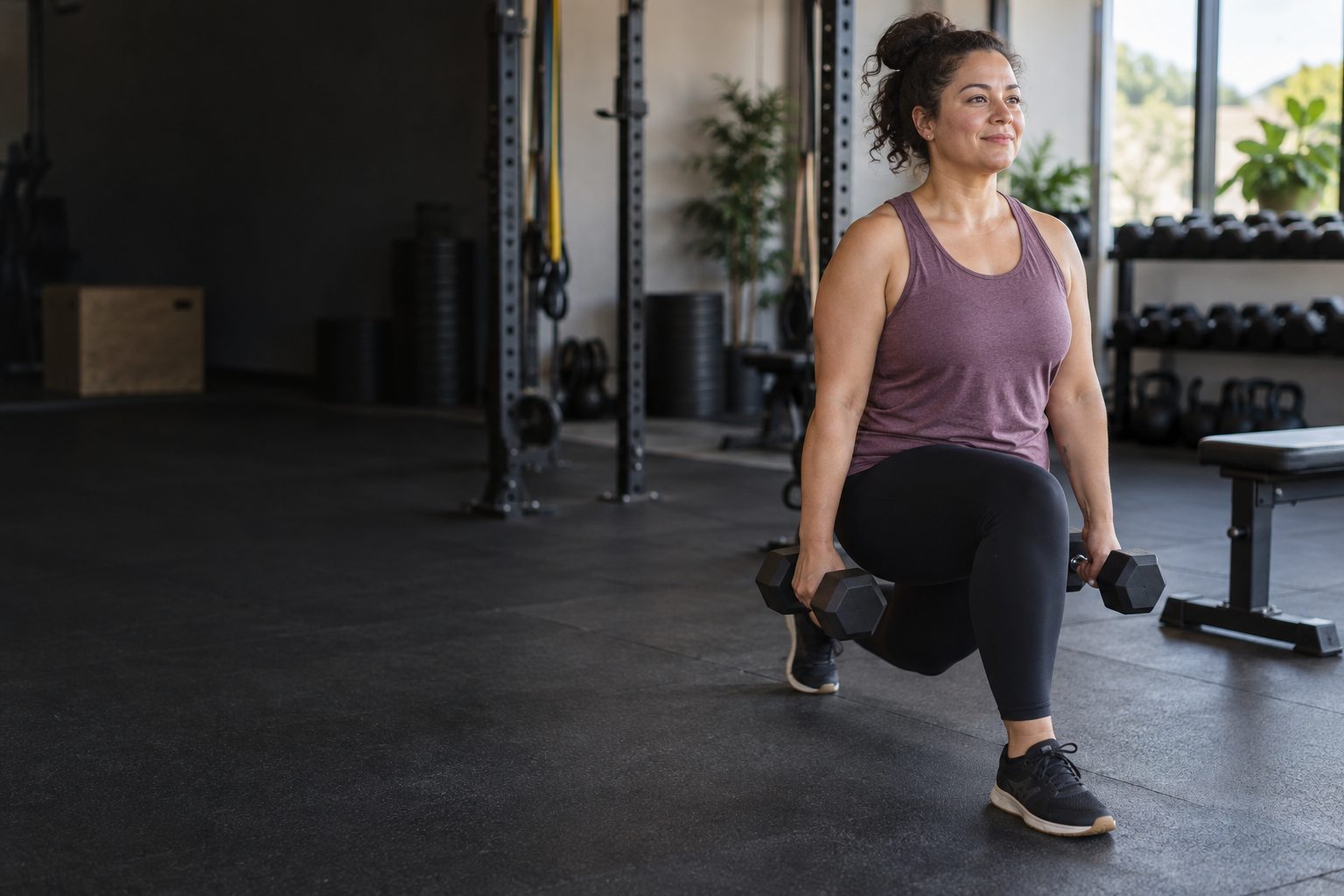
You are standing in front of a rack of dumbbells and every one of them looks like an important decision. Too light and you worry you are wasting your time. Too heavy and you worry about looking foolish or getting hurt. It is one of the most common beginner questions, and it deserves a real answer instead of a shrug.
The honest answer is that there is no universal starting number. This guide explains how to choose a manageable weight for yourself. It is general education, not an individualized load prescription, and anyone with a health condition, past injury, or specific concern should get advice from a qualified professional.
There Is No Universal Starting Weight
Bodies differ in size, experience, history, and strength, and exercises differ in difficulty. A weight that is comfortable for one person on one movement might be far too heavy for another person or a different exercise. Any article that tells every beginner to use a specific number is guessing.
Instead of searching for the right number, focus on the right process: choose something manageable, perform it with control, and adjust based on what you learn.
Start Lighter Than Your Ego Wants
Early sessions are as much about learning as about training. Movement patterns, setup, breathing, and balance all need attention, and heavy weight gets in the way of that. Starting on the lighter side gives you room to practice and to leave each set feeling in control.
You are not stuck there. Starting lighter simply makes the first few weeks more productive because the movements feel familiar before you ask more of them.
Can You Control Every Rep?
A useful test is whether you can perform each repetition smoothly, in a steady tempo, through a comfortable range, without jerking, bouncing, or holding your breath. If the last rep looks very different from the first, or you need momentum to finish, that is a sign to reassess.
Good form is a better guide than a number. If you are unsure whether a movement looks right, the exercise library in FitForgeFlow includes instructions and form cues for many exercises.
Use the Rep Range as Feedback
Most beginner programs give a target repetition range, such as 8 to 12. Treat it as feedback. If you can complete the top of the range with control and feel you could do a few more, the weight may be a bit light and can be increased gradually. If you struggle to reach the bottom of the range with good form, it is probably too heavy for now.
The exact feel varies by exercise and person, but the idea is consistent: the target range should be challenging yet doable with technique intact.
Machines and Free Weights Are Different
Weight stacks, dumbbells, and barbells are not interchangeable. A machine may guide the movement, so the same number can feel easier or harder than a similar dumbbell exercise. Barbells include the weight of the bar itself, and dumbbells are listed per hand.
This is why a number from one setting does not transfer neatly to another. If you are deciding between equipment types, see our comparison of machines and free weights for beginners, and remember that each new exercise starts its own learning curve.
Small Increases Are Enough
When it is time to go heavier, small jumps are usually plenty. Adding a small amount of weight, or an extra repetition or two before increasing the load, keeps progress steady and manageable. Big jumps can turn a good exercise into a struggle.
Progress does not need to happen every session. Our guide on when to add weight explains how to decide, and patience is often rewarded.
One approach many beginners find comfortable is to progress repetitions first. Suppose your target is eight to twelve repetitions. You might stay at the same weight until you can complete every set near the top of that range with control, then increase the load slightly and begin again near the bottom. That is an illustration of the idea, not a prescription, and different programs use different rules.
Record What You Used
Beginners often forget what they lifted last time, which leads to guessing at the start of each workout. Writing down the weight, repetitions, and how the set felt gives you a solid starting point next time.
FitForgeFlow lets you log weight and reps for each set, pre-fills the next set from what you just logged, and can carry weight adjustments toward your next scheduled workout that includes the exercise. Any notes you add can capture how heavy the set felt.
Do Not Copy the Person Next to You
Someone else's weight tells you almost nothing about what is right for you. They may have years of experience, a different body, a different goal, or a different exercise variation. Comparison can push you toward loads that are too heavy or discourage you when you are doing exactly what you should.
Keep your attention on your own controlled repetitions. Everyone in the gym started somewhere, and most people are focused on their own sets.
What if the Weight Jump Is Too Large?
Sometimes the equipment forces a large jump: the next dumbbell is much heavier, or the weight stack increments are wide. In that case you can stay at the current weight and add repetitions within your target range, slow the tempo, or simply repeat the workout a few times before moving up.
Some gyms have smaller plates or adjustable dumbbells that allow finer steps. If a jump feels too big, it probably is, and there is no shame in waiting.
Earn the Next Increase
A simple habit works well: when you can complete all your sets in the target range with controlled form, and the last few repetitions feel challenging but not desperate, you have earned a small increase. If you cannot, repeat the weight and keep practicing.
The goal is a steady climb that you can sustain. Begin with a manageable weight, control every rep, record it, and add a little at a time. If you would like to see how your first sessions might look, start with your first week at the gym.