Every row trains your back, but not every row asks the same thing of your body.
Supported vs. Unsupported Rows
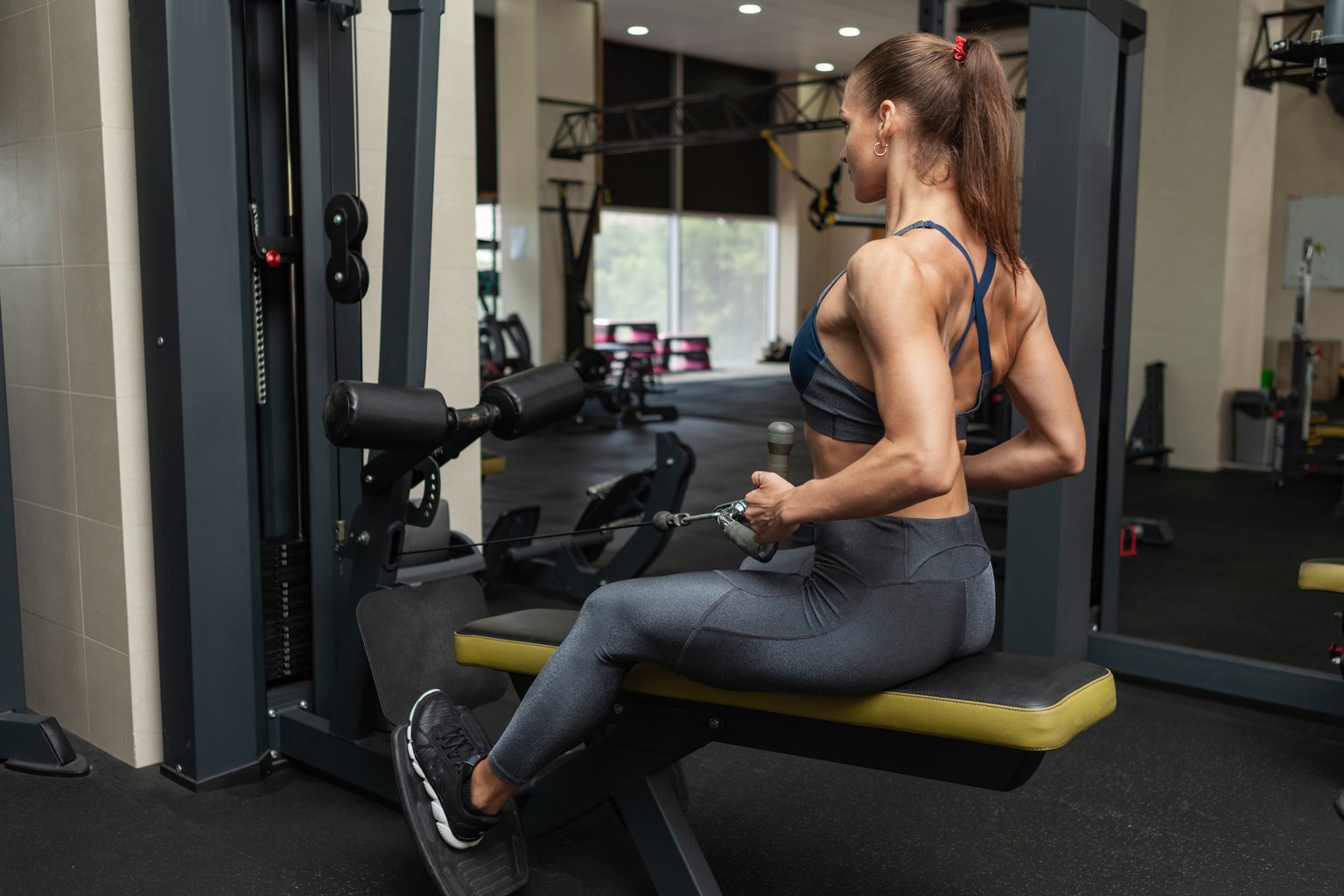
A supported row, such as a chest-supported row or a seated cable row with proper setup, braces part of your body against a pad or seat, which reduces the demand on your lower back and core to stabilize the movement. An unsupported row, such as a bent-over barbell row, requires you to actively stabilize your entire torso throughout the set, which adds an additional coordination and core-stability demand on top of the pulling motion itself.
Single-Arm vs. Two-Arm Rows
A single-arm row, such as a dumbbell row performed one side at a time, allows you to focus on one side independently and can make it easier to notice differences in strength or control between sides. A two-arm row, such as a seated cable row, trains both sides simultaneously and is generally simpler to set up and track as a single working weight.
There is no single best row. There is the row that fits your current ability, equipment, and comfort today.
Machine, Cable, and Free-Weight Differences
Machine rows generally guide your movement path, which can make it easier to focus purely on the pulling motion with less setup complexity. Cable rows, such as the seated cable row, offer a similar guided feel with a bit more range in body positioning. Free-weight rows, such as the dumbbell or barbell row, require more active stabilization throughout, which some lifters prefer for a more complete, functional training effect once they are comfortable with the setup.

Torso Stability Across Variations
Keeping your torso relatively stable throughout a row, rather than using momentum from your lower back to help move the weight, is a common principle across every variation. Supported rows reduce how much this matters by bracing you externally; unsupported rows require you to manage it actively yourself.
Choosing a Variation That Allows Controlled Movement
The most useful variation for you right now is the one where you can perform the movement with consistent control from start to finish, not necessarily the one that looks the most advanced. If a variation causes you to use noticeable momentum or lose your position partway through the set, a more supported option is generally the more productive choice at this stage.
Starting Load
Begin any row variation with a conservative weight that lets you complete each repetition with a controlled pulling motion and a brief pause or squeeze at the end of the movement. You can build up the load gradually once the pattern feels consistent and comfortable.
Basic Pulling Mechanics
Across most row variations, the general idea is to initiate the pull by drawing your shoulder blades back and together, then bending your elbows to bring the weight toward your torso, rather than starting the movement primarily with your arms. This sequencing tends to engage the back muscles more effectively than an arms-first pulling pattern.
Common Mistakes
Using momentum to move the weight. Swinging or jerking the weight, especially on unsupported rows, reduces how much the targeted muscles are actually doing the work.
Shrugging the shoulders toward the ears. This often indicates the weight is too heavy for the current level of control, shifting work toward the upper traps instead of the intended back muscles.
Cutting the range of motion short. Stopping well before a full, controlled range limits how effectively the exercise trains the target muscles through that range.
When a Supported Option May Be Easier to Learn
If you are newer to rowing movements, or dealing with lower back discomfort that makes unsupported positions uncomfortable, a chest-supported or seated cable row is often a more approachable starting point. It removes the additional stabilization demand, letting you focus entirely on learning the pulling pattern itself before progressing to less supported variations.
The Takeaway
Seated cable rows, chest-supported rows, dumbbell rows, machine rows, and barbell rows all train your back, but they differ in how much stabilization, coordination, and setup they require. Choose the variation that lets you move with control given your current ability and the equipment available, and progress to less supported options as that control develops. According to general strength-training principles from organizations such as the National Strength and Conditioning Association, prioritizing consistent, controlled technique is a widely supported foundation for safe, effective progress in any pulling exercise.
Stop guessing. Start training.