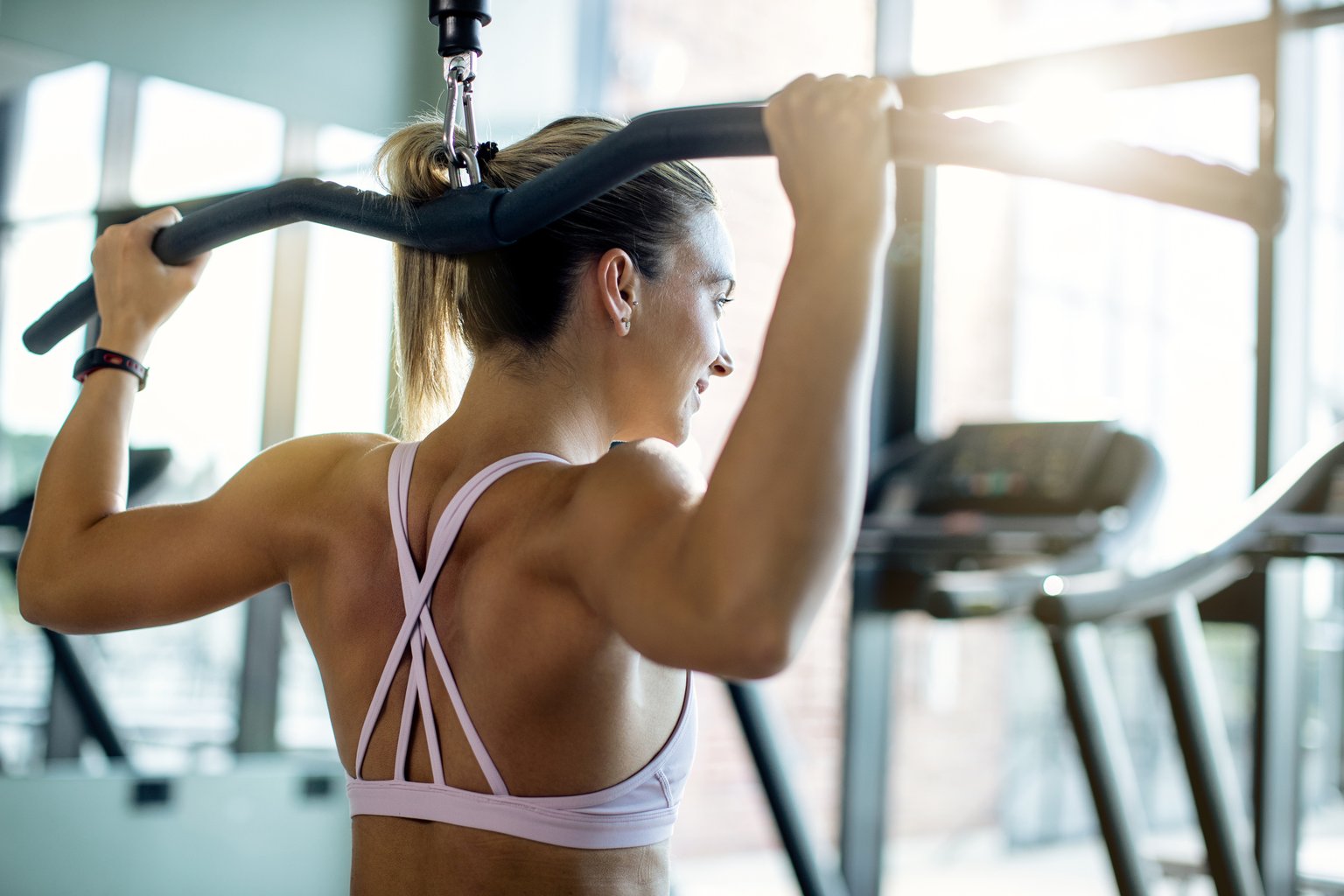
The lat pulldown looks simple. The amount of weight people load onto it before learning the movement rarely is.
Basic Machine Setup
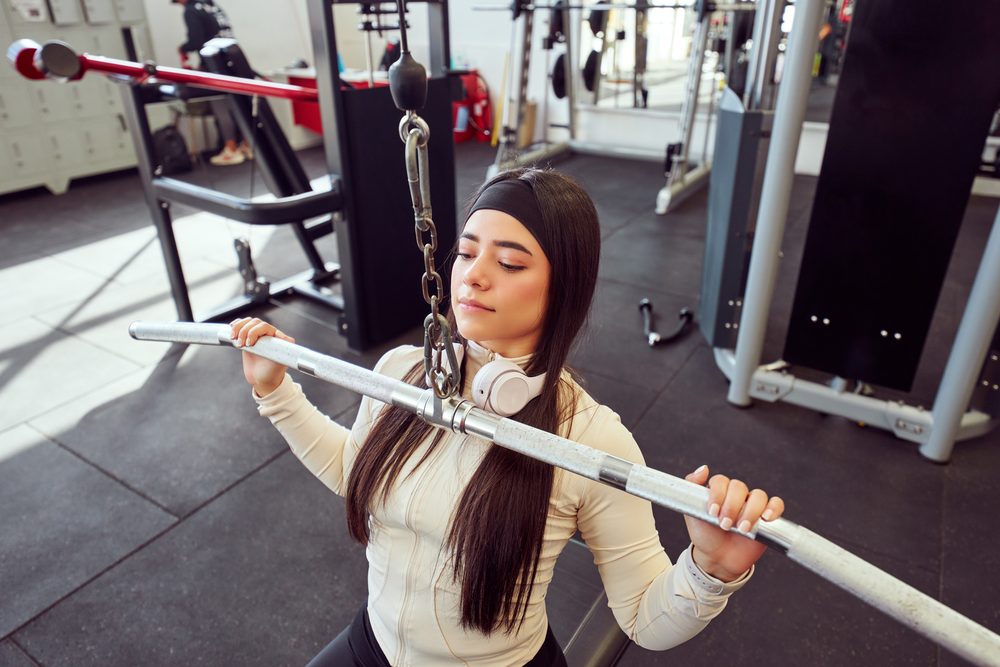
Sit facing the machine with the bar directly overhead, select a reasonable starting weight, and position yourself so you can reach the bar comfortably without straining upward or leaning excessively forward to grab it.
Thigh Pad Adjustment
Adjust the thigh pad so it rests snugly against your legs, just above your knees. This small detail keeps you anchored to the seat during the pull, rather than letting your body rise off the seat as the weight gets heavier.
Grip Options
A wide overhand grip, a closer underhand grip, and a neutral grip on a different attachment all target the back muscles with some variation in emphasis. There is no single grip that is universally best; each is a reasonable option, and trying a few over time can help you find what feels most comfortable and effective for your body.
No single grip is the "correct" one. The right grip is the one you can control with good form.
Stable Torso Position
Keep your torso relatively upright with a slight backward lean, rather than rocking your whole body backward to help move the weight. A stable torso throughout the set keeps the work focused on your back muscles rather than momentum generated by your body.
Pulling Direction
Pull the bar down and slightly back, generally toward your upper chest, by driving your elbows down and back rather than primarily pulling with your hands and arms. This sequencing helps engage the back muscles the exercise is meant to target.
Controlled Return
Let the bar rise back up with control, resisting the weight rather than allowing it to snap back quickly. This controlled return phase is just as much a part of the exercise as the pulling phase, and rushing it reduces how effectively the muscle is being trained.
Usable Range of Motion
Pull the bar down to a point that feels controlled and comfortable, generally somewhere around your upper chest, without needing to force it to touch your chest or go beyond a range that compromises your form. A shorter, well-controlled range of motion is more productive than a longer one performed with poor control.
Starting Weight
Begin with a conservative weight that allows you to complete each repetition with a controlled pull and an equally controlled return, keeping your torso stable throughout. You can increase the weight gradually once the movement pattern feels consistent.
Common Mistakes
Using too much weight to complete the rep. If you need significant body momentum or torso swing to move the bar, the weight is likely too heavy for your current control.
Leaning back excessively. A small lean is normal; using your entire body weight to yank the bar down shifts the work away from your back muscles.
Letting the weight stack slam on the way up. This usually indicates the return phase is being rushed rather than controlled.
Excessive Leaning and Swinging
A small, natural lean as you pull is a normal part of the movement for many people. Repeatedly throwing your body weight backward to generate force, however, turns the exercise into more of a full-body heave than a controlled back exercise, and tends to reduce how effectively the targeted muscles are worked.
A Note on Pulling Behind the Neck
Pulling the bar behind the neck rather than to the front is a variation some experienced lifters use, but it places the shoulders in a more demanding position and is generally considered less forgiving for people who are newer to the movement or who have limited shoulder mobility. For most people, especially beginners, pulling to the front of the body is the more broadly comfortable and accessible option.
When to Reduce Weight
If you notice your torso swinging significantly, your range of motion shrinking under load, or general strain that was not present at a lighter weight, that is a reasonable signal to reduce the load and rebuild control before adding weight back.
Machine or Cable Alternatives
If the standard lat pulldown setup does not feel comfortable, an assisted pull-up machine or a different cable attachment can train similar muscles with a different setup and feel. Switching to a variation that allows better control is a reasonable adjustment, not a step backward.
The Takeaway
The lat pulldown rewards control far more than it rewards the number on the weight stack. A stable torso, a controlled pull and return, and a weight you can manage with good form will train your back more effectively than a heavier weight moved with your whole body. According to general strength-training guidance from organizations such as the National Strength and Conditioning Association, prioritizing controlled technique over maximal load is a widely supported approach for both safety and long-term progress.
Stop guessing. Start training.