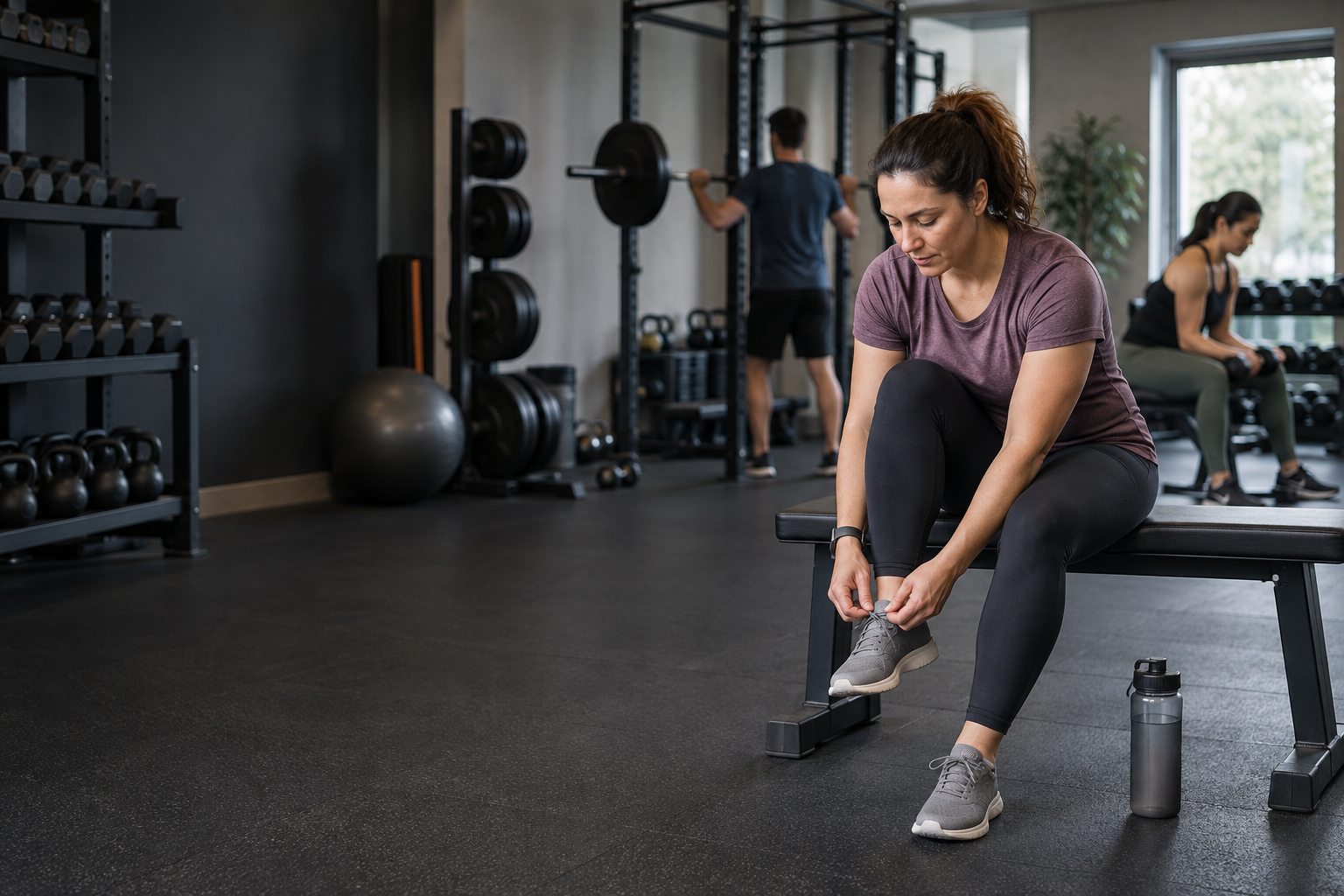
A practical, compassionate approach to working out in public
Why the Gym Can Feel Intimidating
Gyms combine unfamiliar equipment, mirrors, noise, and public effort. It is understandable to feel self-conscious when you are still learning the space or returning after time away.
This article offers practical ways to reduce ordinary gym intimidation. It is not mental-health diagnosis or treatment. If anxiety is severe or affects daily life, consider support from a qualified professional.
Most People Are Focused on Their Own Workout
The person nearby is usually counting repetitions, watching a timer, checking form, or thinking about the rest of their day. Other members may notice movement around them without evaluating it.
You do not need to perform for the room. Direct your attention toward the plan, the current exercise, and the effort you can control.
Arrive With a Plan
Choose a short, familiar workout before you enter. Know the first exercise and one alternative. A prepared plan reduces the need to scan the room while deciding what belongs together.
Keep the plan visible on your phone or in a notebook. When uncertainty appears, return to the next written step instead of trying to guess what would look most experienced.
Pick a Small Starting Zone
Use one manageable area at first. A few machines, a bench with dumbbells, or a quiet corner can provide enough options for a complete session.
Staying in a smaller zone reduces navigation and gives you time to learn local routines such as adjusting seats and returning equipment. Expand when you feel ready.
Use Familiar Movements First
Begin with exercises you have reviewed or practiced. Familiarity lets you focus on breathing, control, and the target effort rather than on whether everyone can see you learning.
Use manageable resistance and seek qualified form guidance if you are unsure. Sharp pain is a reason to stop the movement, not a test of confidence.
Choose a Time That Feels Manageable
If your schedule allows, visit during a quieter period. Ask the facility when traffic is lower or observe patterns across the week.
You do not have to avoid busy hours forever. A quieter session can help you learn the environment before adding more people and noise.
Give Yourself a Clear Finish Line
A workout with a defined exercise list and approximate duration prevents the session from feeling endless. Complete the plan, record it, and allow yourself to leave.
You do not owe the gym extra time to prove that the visit counted. A short completed workout is still a real session.
Stop Comparing Your Beginning to Someone Else's Middle
You may see people moving confidently because they have repeated the same habits for years. Their current ability does not describe what your first week should look like.
Compare your session with your own plan: Did you arrive, learn something, and complete appropriate work? Those are useful measures of an early visit.
Confidence Is Built Through Repetition
Return to the same workout or area until the setup feels routine. Each visit removes a small unknown and gives you evidence that you can navigate the environment.
Comfort may grow slowly, and some days will still feel awkward. Progress is not the complete absence of nerves; it is being able to act while they are present.
Create a Lower-Pressure First Session
Choose three or four familiar exercises in one part of the gym. Review their setup before arriving and keep the total session short enough that the finish line feels believable.
Enter with the first movement already selected. If headphones help and facility rules allow them, use music or audio that does not prevent awareness of the room. Keep your phone on the workout rather than on social comparison.
Between sets, look at your next target instead of scanning for reactions. Most people will continue with their own routines. If someone needs to share equipment, a simple conversation is normal gym behavior, not a test.
Leave when the planned work is complete. You can stay longer if you genuinely want to, but you do not have to earn the right to go home.
Repeat the same session once or twice. Predictability can reduce the number of moments that trigger self-consciousness and allow attention to shift toward training.
The First Rep Still Counts
Wear clothing you feel comfortable moving in, use headphones if they are permitted and helpful, and keep the next action simple.
Open the plan, set up the first exercise, and perform the first controlled repetition. You do not need the attention or approval of the room for that repetition to matter.