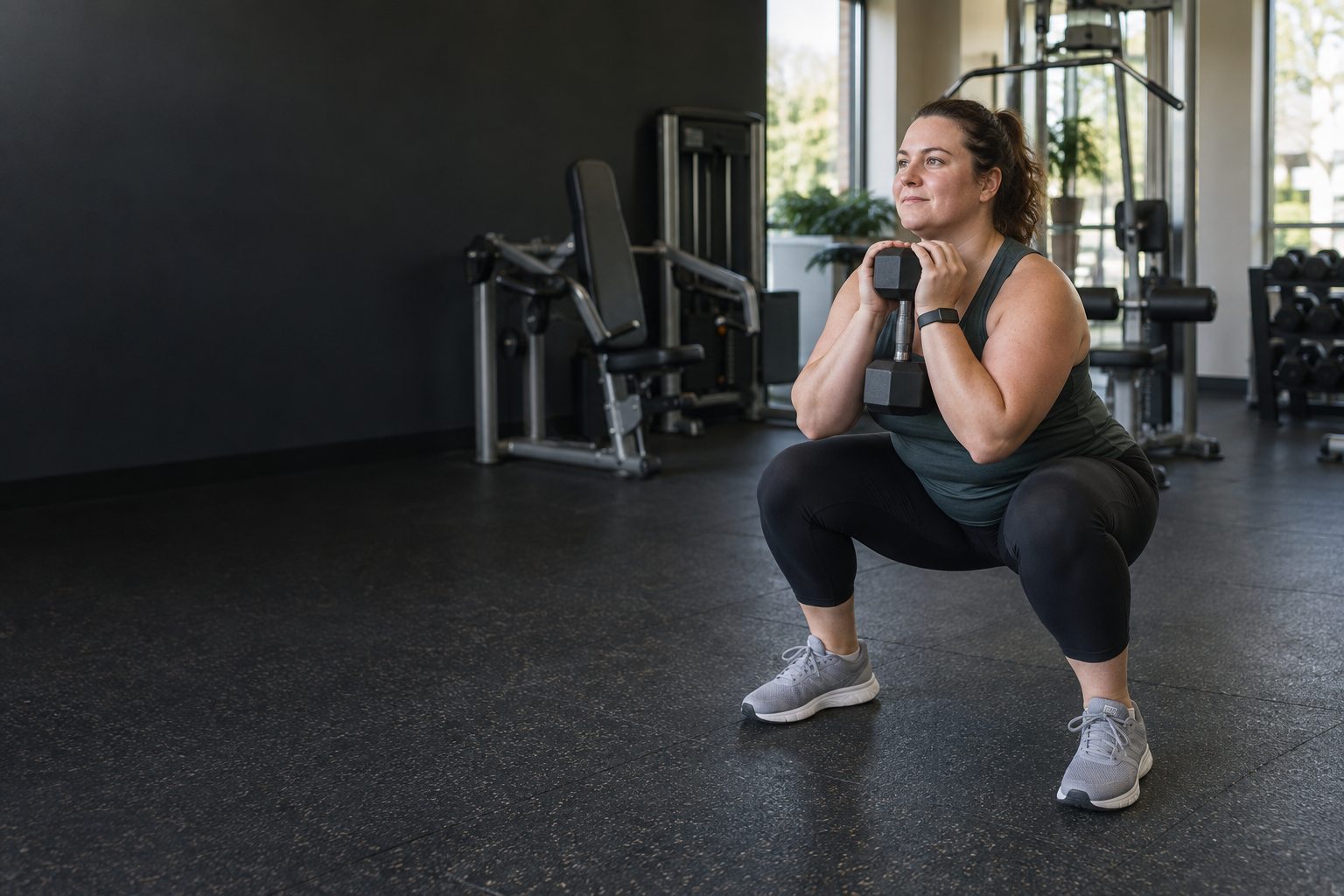
The first month at a gym is not a test. It is a learning period, and treating it that way changes everything. You are not trying to prove anything, hit a target weight, or look like someone who has been coming for years. You are trying to become someone who comes back.
This guide lays out a simple four-week roadmap: learn the environment, repeat the movements, build the habit, and review what changed. It is general education, not an individualized plan, and it makes no promises about specific results. If you have a health condition or concerns, check with a qualified healthcare professional before you start.
Your First Month Is About Learning
Success in the first thirty days does not look like a personal record. It looks like knowing where things are, understanding a handful of movements, and having a rhythm you can repeat.
Those are the skills that make month two easier. Once the space and the routine feel familiar, you can put your energy into training instead of figuring things out.
Try to define success in behavior, not results. Three sessions each week, a workout you can repeat, and notes in your log are all achievements a beginner can control.
Week 1: Learn the Gym
Spend the first week getting comfortable. Walk the floor, find the dumbbells, the machines, the water, and the restrooms. Try a few simple exercises with light weights, and pay attention to the setup instructions.
Two or three short sessions is plenty. Our guide on your first week at the gym is a good companion, and having the workout ready before you arrive helps a great deal.
You are not trying to complete a big workout. A pair of exercises for the lower body, a push, a pull, and something light for the core is more than enough, and it is fine to stop when you feel you have learned what you came to learn. Ask a staff member to show you how a machine works if you are unsure, since most gyms are happy to help.
Week 2: Repeat, Do Not Reinvent
Do the same workout again. Familiar exercises let you notice what is different: the machine feels easier to set up, the movement feels smoother, the weights feel more manageable.
Repetition is not boring here. It is how movements become natural and how you begin to measure change. Our article on whether to do the same workout every week explains why.
Try to keep the same exercises, the same order, and roughly the same weights, changing only what feels clearly wrong. If something felt easy, note it. If something felt awkward, focus on one cue.
Week 3: Build the Habit
By now the goal is consistency. Pick a schedule you can keep, even when the week gets busy. Our guide on how many days a week a beginner should work out can help you choose.
If you miss a session, do not restart the month. Pick up at the next scheduled workout. A short workout on a busy day counts, and it is often what keeps a habit alive.
This is also a good week to shape your routine around your calendar. Choose workout days that you protect the way you would protect an appointment, and prepare your bag or your plan the night before.
Week 4: Review What Changed
Look back over the month. Which exercises feel easier? Where did you add a repetition or a little weight? What still feels awkward? What did you enjoy?
Use those answers to make a small adjustment or two, such as adding a set, swapping an exercise you dislike, or increasing one weight slightly. You are not overhauling the plan, just tuning it.
You might also ask how you feel overall. More energy, better sleep, or simply looking forward to the workout are all reasonable things to notice, though they vary from person to person and are not guaranteed.
Do Not Chase Maximum Weight
A common mistake in the first month is trying to lift as heavy as possible. Your technique and coordination are still developing, and heavy loads leave less room for learning.
Choose weights that let you complete each set with control and a few repetitions to spare. Our guide on how much weight a beginner should lift explains how to choose.
Progress is safer and more sustainable when it is gradual. If a weight feels easy for all your sets, you can increase it slightly next time, not immediately.
Keep a Training Log
Writing down what you did makes every next workout easier. You know what weight you used, how many repetitions you completed, and how it felt. That is the reason a simple workout log is so valuable.
FitForgeFlow lets you record the weight and reps for each set, add notes, and see your workout history. After a month, you will have a record of real progress instead of a vague impression.
Even simple notes such as felt easy or seat on setting 4 save time later. The details you forget are usually the ones that would have helped most.
Learn One Adjustment at a Time
New lifters often try to fix everything at once: foot position, grip, breathing, tempo. That is overwhelming. Instead, pick one cue for each exercise and focus on it for a session or two.
Once it feels natural, add another. The exercise library in FitForgeFlow includes instructions and form cues you can review between workouts.
For example, on a squat you might focus on keeping your chest up for two sessions, then on sitting a little deeper. Small, single focuses are easier to remember than a long list.
Confidence Comes From Familiarity
The gym feels intimidating mostly because it is unfamiliar. Each visit reduces that. You learn where to stand, how to set the equipment, and what to expect from the other people there, most of whom are focused on their own workouts.
If a session is hard, remember that starting small is a legitimate strategy. Our article on starting smaller than you think explains why small, repeated efforts build lasting routines.
By week four, many beginners notice they no longer feel lost. They know their route through the gym and a few movements by heart, and that quiet confidence is worth as much as any number on a bar.
What to Do After Day 30
After a month, you have a foundation: a few familiar movements, a schedule that fits, and a log to guide you. From here you can gradually add weight, sets, or new exercises, one change at a time.
Keep the parts that work, adjust the parts that do not, and stay patient. Progress over the next months comes from doing the simple things consistently. The first thirty days give you the habit that makes everything else possible.