Use hip extension, a squat or lunge, and focused accessory work
What the Glutes Do
The glutes help extend the hip, stabilize the pelvis, and support many squat, hinge, lunge, running, and carrying tasks. Training them does not require a separate exercise for every fiber.
For a practical session, treat this as one part of the complete program. Glute training works best when each movement has a clear role and the complete week remains recoverable. Use a manageable load, stop any movement that causes sharp pain, and seek qualified guidance when technique or discomfort is uncertain.
Start With Hip Extension
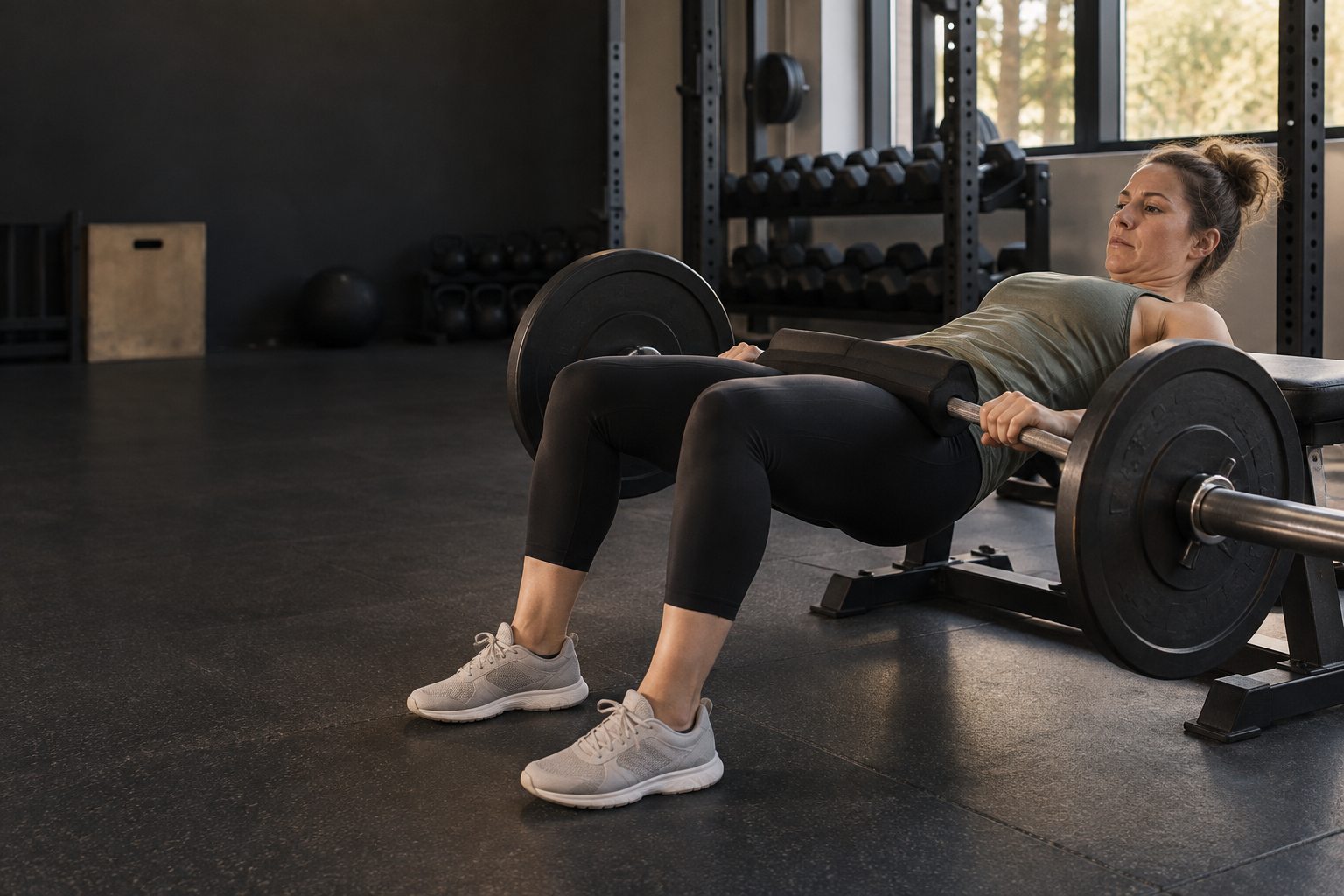
A glute bridge or hip thrust provides a direct hip-extension pattern. Learn body position and a comfortable range before adding significant load.
Record the variation, setup, repetitions, resistance, and one useful technique note. On the next session, compare like with like before adding volume or changing exercises. FitForgeFlow can keep that plan visible so training time is spent performing rather than repeatedly rebuilding the workout.
Add a Squat or Lunge Pattern
Goblet squats, leg presses, reverse lunges, or split squats train the glutes alongside the quads and other supporting muscles. Select one pattern that matches current skill and equipment.
For a practical session, treat this as one part of the complete program. Glute training works best when each movement has a clear role and the complete week remains recoverable. Use a manageable load, stop any movement that causes sharp pain, and seek qualified guidance when technique or discomfort is uncertain.
Use Abduction as Accessory Work
Cable or machine hip abduction can add focused accessory work after the larger movements. Keep the pelvis controlled instead of creating momentum through the torso.
Record the variation, setup, repetitions, resistance, and one useful technique note. On the next session, compare like with like before adding volume or changing exercises. FitForgeFlow can keep that plan visible so training time is spent performing rather than repeatedly rebuilding the workout.
A Simple Beginner Glute Workout
One example is a hip thrust or bridge for three sets, goblet squat or leg press for three sets, reverse lunge for two sets per side, and hip abduction for two controlled sets.
For a practical session, treat this as one part of the complete program. Glute training works best when each movement has a clear role and the complete week remains recoverable. Use a manageable load, stop any movement that causes sharp pain, and seek qualified guidance when technique or discomfort is uncertain.
How Heavy Should You Go?
Use a manageable load that leaves several technically sound repetitions available. Add weight only when setup, range, and tempo remain consistent.
Record the variation, setup, repetitions, resistance, and one useful technique note. On the next session, compare like with like before adding volume or changing exercises. FitForgeFlow can keep that plan visible so training time is spent performing rather than repeatedly rebuilding the workout.
Feel the Muscle Without Chasing the Burn
Muscle sensation can provide feedback, but burning is not the score. Stable technique, recorded repetitions, and gradual progression are more useful measures.
For a practical session, treat this as one part of the complete program. Glute training works best when each movement has a clear role and the complete week remains recoverable. Use a manageable load, stop any movement that causes sharp pain, and seek qualified guidance when technique or discomfort is uncertain.
What If Hip Thrusts Feel Awkward?
Begin with a floor bridge, use a padded machine, or choose another appropriate hip-extension exercise. Ask qualified staff for setup help and stop movements that cause sharp pain.
Record the variation, setup, repetitions, resistance, and one useful technique note. On the next session, compare like with like before adding volume or changing exercises. FitForgeFlow can keep that plan visible so training time is spent performing rather than repeatedly rebuilding the workout.
Common Beginner Mistakes
Avoid adding many nearly identical kickback and abduction variations, rushing lunges, or using a hip-thrust load that prevents a controlled finish.
For a practical session, treat this as one part of the complete program. Glute training works best when each movement has a clear role and the complete week remains recoverable. Use a manageable load, stop any movement that causes sharp pain, and seek qualified guidance when technique or discomfort is uncertain.
Repeat Before You Add More
Run the same clear session for several weeks, record results, and notice recovery. Add volume or complexity only when the current plan creates a specific need.
Record the variation, setup, repetitions, resistance, and one useful technique note. On the next session, compare like with like before adding volume or changing exercises. FitForgeFlow can keep that plan visible so training time is spent performing rather than repeatedly rebuilding the workout.