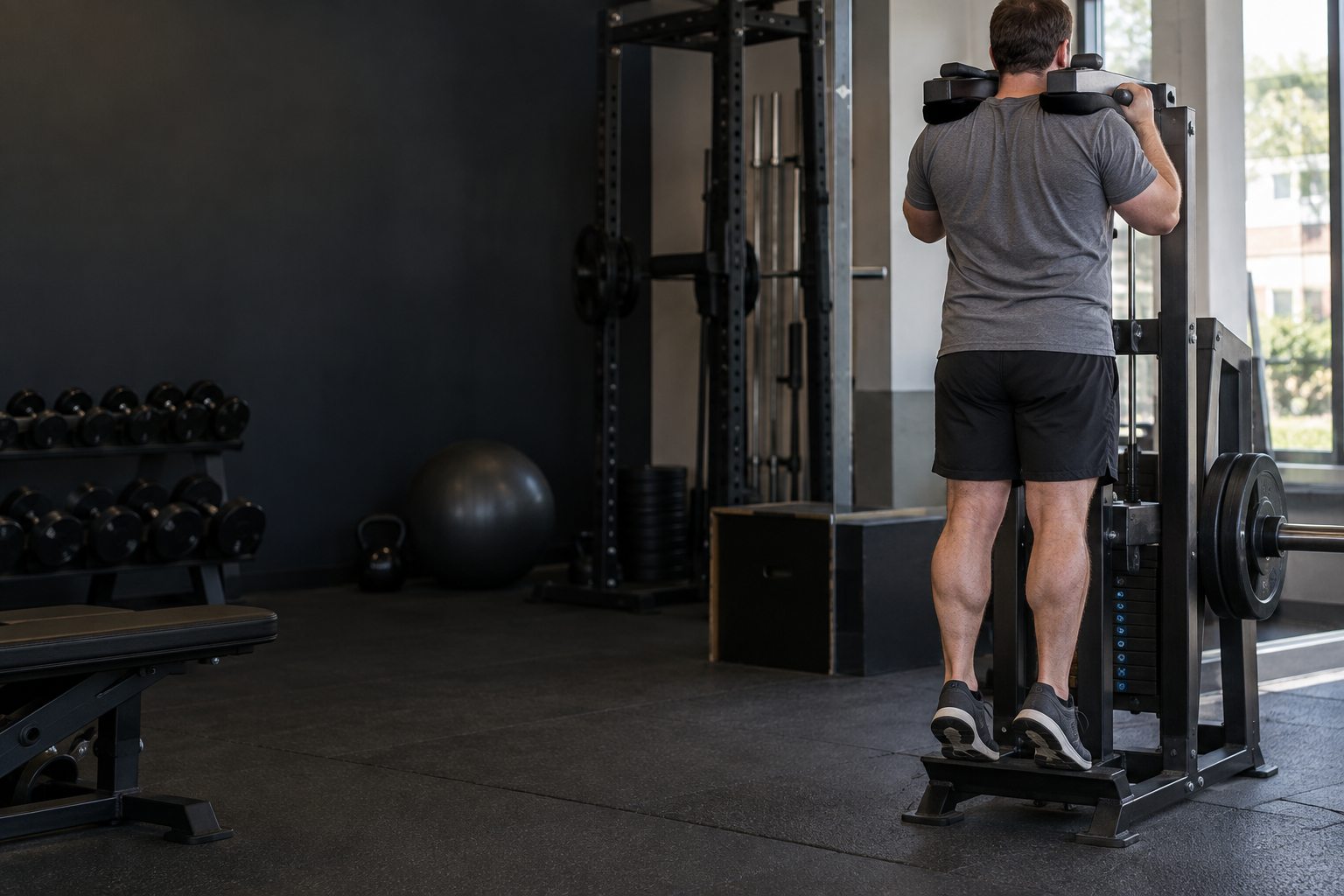
Build leg strength with a squat pattern, stable pressing, and controlled accessories
What the Quads Do
The quadriceps straighten the knee and contribute strongly to squats, lunges, leg presses, stairs, and many athletic actions. They work with the glutes and other muscles rather than in isolation.
For a practical session, treat this as one part of the complete program. Quad training should combine controlled knee-dominant work with a workload the customer can repeat and progress. Use a manageable load, stop any movement that causes sharp pain, and seek qualified guidance when technique or discomfort is uncertain.
Start With a Squat Pattern
A goblet squat, hack squat, or another supported squat can teach knee and hip coordination. Use a range you can control without forcing depth.
Record the variation, setup, repetitions, resistance, and one useful technique note. On the next session, compare like with like before adding volume or changing exercises. FitForgeFlow can keep that plan visible so training time is spent performing rather than repeatedly rebuilding the workout.
Use the Leg Press for Stable Volume
The leg press provides a stable way to practice knee-dominant work. Adjust the seat and foot position according to the machine instructions and avoid locking the knees aggressively.
For a practical session, treat this as one part of the complete program. Quad training should combine controlled knee-dominant work with a workload the customer can repeat and progress. Use a manageable load, stop any movement that causes sharp pain, and seek qualified guidance when technique or discomfort is uncertain.
Add Single-Leg Work
Reverse lunges or split squats can add unilateral strength and control. Use a rail or support when balance prevents good repetitions.
Record the variation, setup, repetitions, resistance, and one useful technique note. On the next session, compare like with like before adding volume or changing exercises. FitForgeFlow can keep that plan visible so training time is spent performing rather than repeatedly rebuilding the workout.
Use Leg Extensions as an Accessory
Leg extensions offer direct quad work after the larger movements. Choose a manageable resistance and move smoothly rather than kicking the stack.
For a practical session, treat this as one part of the complete program. Quad training should combine controlled knee-dominant work with a workload the customer can repeat and progress. Use a manageable load, stop any movement that causes sharp pain, and seek qualified guidance when technique or discomfort is uncertain.
A Simple Beginner Quad Workout
One example is goblet or hack squats for three sets, leg press for three sets, split squats or reverse lunges for two sets per side, and leg extensions for two sets.
Record the variation, setup, repetitions, resistance, and one useful technique note. On the next session, compare like with like before adding volume or changing exercises. FitForgeFlow can keep that plan visible so training time is spent performing rather than repeatedly rebuilding the workout.
How Much Weight Should You Use?
Choose resistance that allows the planned repetitions with stable feet, controlled lowering, and several good repetitions in reserve. Technique should not collapse to finish the set.
For a practical session, treat this as one part of the complete program. Quad training should combine controlled knee-dominant work with a workload the customer can repeat and progress. Use a manageable load, stop any movement that causes sharp pain, and seek qualified guidance when technique or discomfort is uncertain.
Rest Between Sets
Larger squat and press movements often need one to three minutes depending on effort. Accessory work may need less, but rushing is not required.
Record the variation, setup, repetitions, resistance, and one useful technique note. On the next session, compare like with like before adding volume or changing exercises. FitForgeFlow can keep that plan visible so training time is spent performing rather than repeatedly rebuilding the workout.
Common Beginner Mistakes
Avoid changing foot positions constantly, chasing depth beyond control, loading before learning the machine, or adding every quad machine in one session.
For a practical session, treat this as one part of the complete program. Quad training should combine controlled knee-dominant work with a workload the customer can repeat and progress. Use a manageable load, stop any movement that causes sharp pain, and seek qualified guidance when technique or discomfort is uncertain.
Keep the Routine Consistent
Save seat settings, loads, repetitions, and notes. Repeat the same structure long enough to distinguish real progress from a different machine or setup.
Record the variation, setup, repetitions, resistance, and one useful technique note. On the next session, compare like with like before adding volume or changing exercises. FitForgeFlow can keep that plan visible so training time is spent performing rather than repeatedly rebuilding the workout.