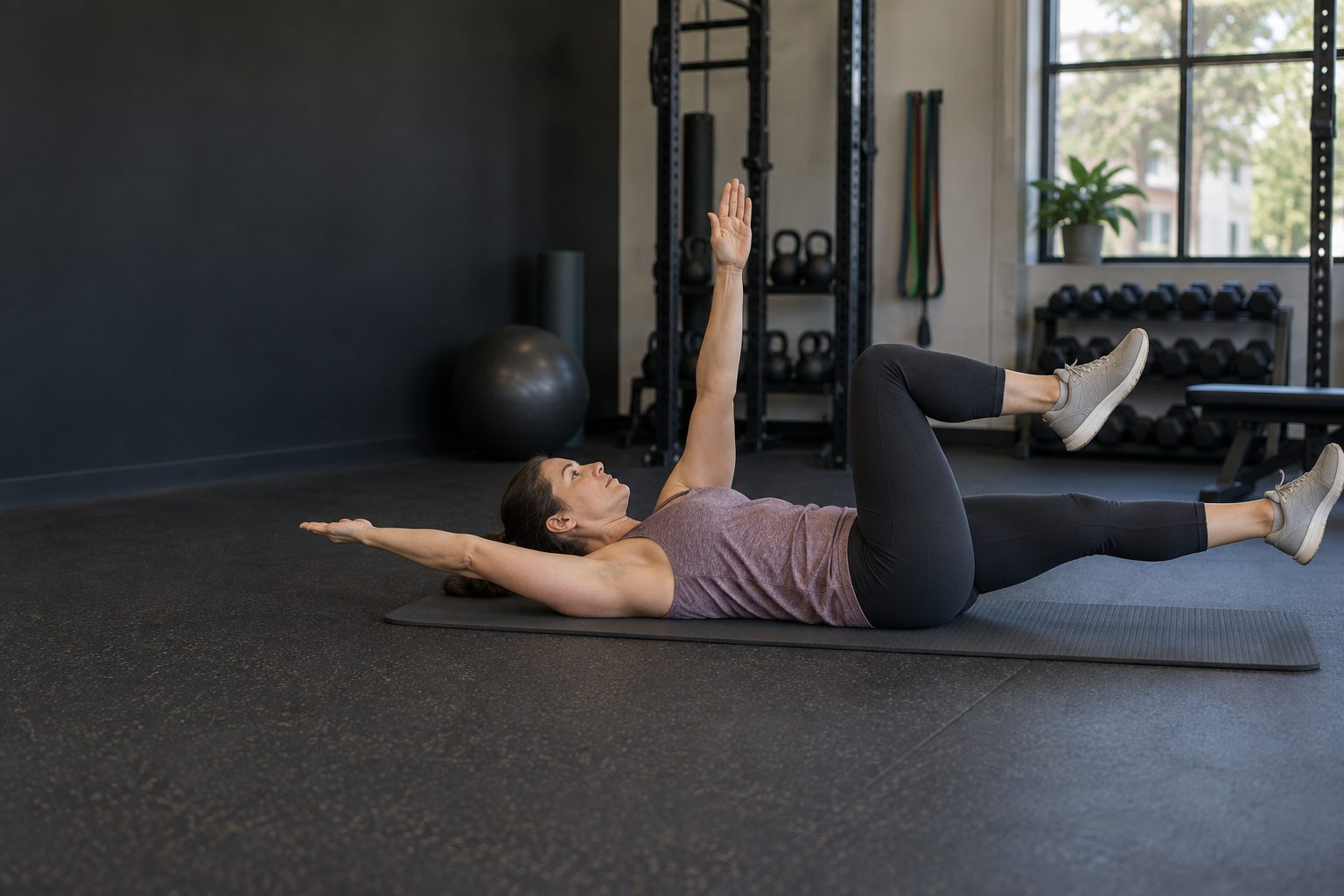
Build bracing, stability, and control with a simple starting routine
What Your Core Actually Does
Your core helps transfer force, maintain position, and control movement between the upper and lower body. It works when you brace for a squat, carry groceries, press a weight, or resist being pulled out of position.
For a practical session, treat this as one part of the complete program. Core training is most useful when control, breathing, and repeatable positions matter more than speed or novelty. Use a manageable load, stop any movement that causes sharp pain, and seek qualified guidance when technique or discomfort is uncertain.
Why Crunches Are Only One Piece
Crunches train controlled trunk flexion, but that is only one function. A complete beginner routine can also ask the trunk to resist extension, rotation, and side bending while breathing normally.
Record the variation, setup, repetitions, resistance, and one useful technique note. On the next session, compare like with like before adding volume or changing exercises. FitForgeFlow can keep that plan visible so training time is spent performing rather than repeatedly rebuilding the workout.
Learn to Brace
Think about gently tightening the trunk as if preparing for a light bump, without holding your breath or flattening every natural curve. Practice during a dead bug or plank before adding load.
For a practical session, treat this as one part of the complete program. Core training is most useful when control, breathing, and repeatable positions matter more than speed or novelty. Use a manageable load, stop any movement that causes sharp pain, and seek qualified guidance when technique or discomfort is uncertain.
A Simple Beginner Core Workout
One example is dead bugs for two or three controlled sets, short planks, Pallof presses on each side, and cable or controlled floor crunches. An optional farmer carry can add upright stability when space and experience allow.
Record the variation, setup, repetitions, resistance, and one useful technique note. On the next session, compare like with like before adding volume or changing exercises. FitForgeFlow can keep that plan visible so training time is spent performing rather than repeatedly rebuilding the workout.
How Long Should You Hold a Plank?
Use a duration that lets you keep a steady position. Ten to thirty good seconds can be more useful than a long hold that becomes a contest against sagging, shaking, or breath holding.
For a practical session, treat this as one part of the complete program. Core training is most useful when control, breathing, and repeatable positions matter more than speed or novelty. Use a manageable load, stop any movement that causes sharp pain, and seek qualified guidance when technique or discomfort is uncertain.
Slow Reps Beat Rushed Reps
Move a dead bug or Pallof press slowly enough to notice whether the ribs, pelvis, and shoulders remain controlled. Speed can hide compensation and turn stability practice into general movement.
Record the variation, setup, repetitions, resistance, and one useful technique note. On the next session, compare like with like before adding volume or changing exercises. FitForgeFlow can keep that plan visible so training time is spent performing rather than repeatedly rebuilding the workout.
What If Your Lower Back Takes Over?
Shorten the lever, reduce the load, or choose an easier variation. Stop if an exercise causes sharp pain. Persistent discomfort deserves qualified assessment rather than self-diagnosis from a workout article.
For a practical session, treat this as one part of the complete program. Core training is most useful when control, breathing, and repeatable positions matter more than speed or novelty. Use a manageable load, stop any movement that causes sharp pain, and seek qualified guidance when technique or discomfort is uncertain.
Core Training Does Not Need to Be Daily
The trunk also works during presses, rows, squats, hinges, and carries. Two or three focused sessions may be enough depending on the rest of the program and recovery.
Record the variation, setup, repetitions, resistance, and one useful technique note. On the next session, compare like with like before adding volume or changing exercises. FitForgeFlow can keep that plan visible so training time is spent performing rather than repeatedly rebuilding the workout.
Add Difficulty Gradually
Progress with a longer lever, slightly more load, additional controlled repetitions, or a modestly longer hold. Change one variable at a time so you know what improved.
For a practical session, treat this as one part of the complete program. Core training is most useful when control, breathing, and repeatable positions matter more than speed or novelty. Use a manageable load, stop any movement that causes sharp pain, and seek qualified guidance when technique or discomfort is uncertain.
Build Control Before Complexity
Repeat the basic routine until setup is familiar and positions stay consistent. Advanced-looking movements are not automatically more effective than simple exercises performed with clear intent.
Record the variation, setup, repetitions, resistance, and one useful technique note. On the next session, compare like with like before adding volume or changing exercises. FitForgeFlow can keep that plan visible so training time is spent performing rather than repeatedly rebuilding the workout.