Train the trunk through several functions instead of collecting ab exercises
Strong Does Not Mean Doing More Crunches
Core strength includes producing movement and resisting unwanted movement. A well-rounded plan uses a few complementary tasks instead of adding endless crunch variations.
For a practical session, treat this as one part of the complete program. Core training is most useful when control, breathing, and repeatable positions matter more than speed or novelty. Use a manageable load, stop any movement that causes sharp pain, and seek qualified guidance when technique or discomfort is uncertain.
Resist Extension
Planks, dead bugs, and rollout progressions challenge the trunk to keep the lower back and rib position controlled as the arms or legs move. Begin with the variation you can perform without losing position.
Record the variation, setup, repetitions, resistance, and one useful technique note. On the next session, compare like with like before adding volume or changing exercises. FitForgeFlow can keep that plan visible so training time is spent performing rather than repeatedly rebuilding the workout.
Resist Rotation
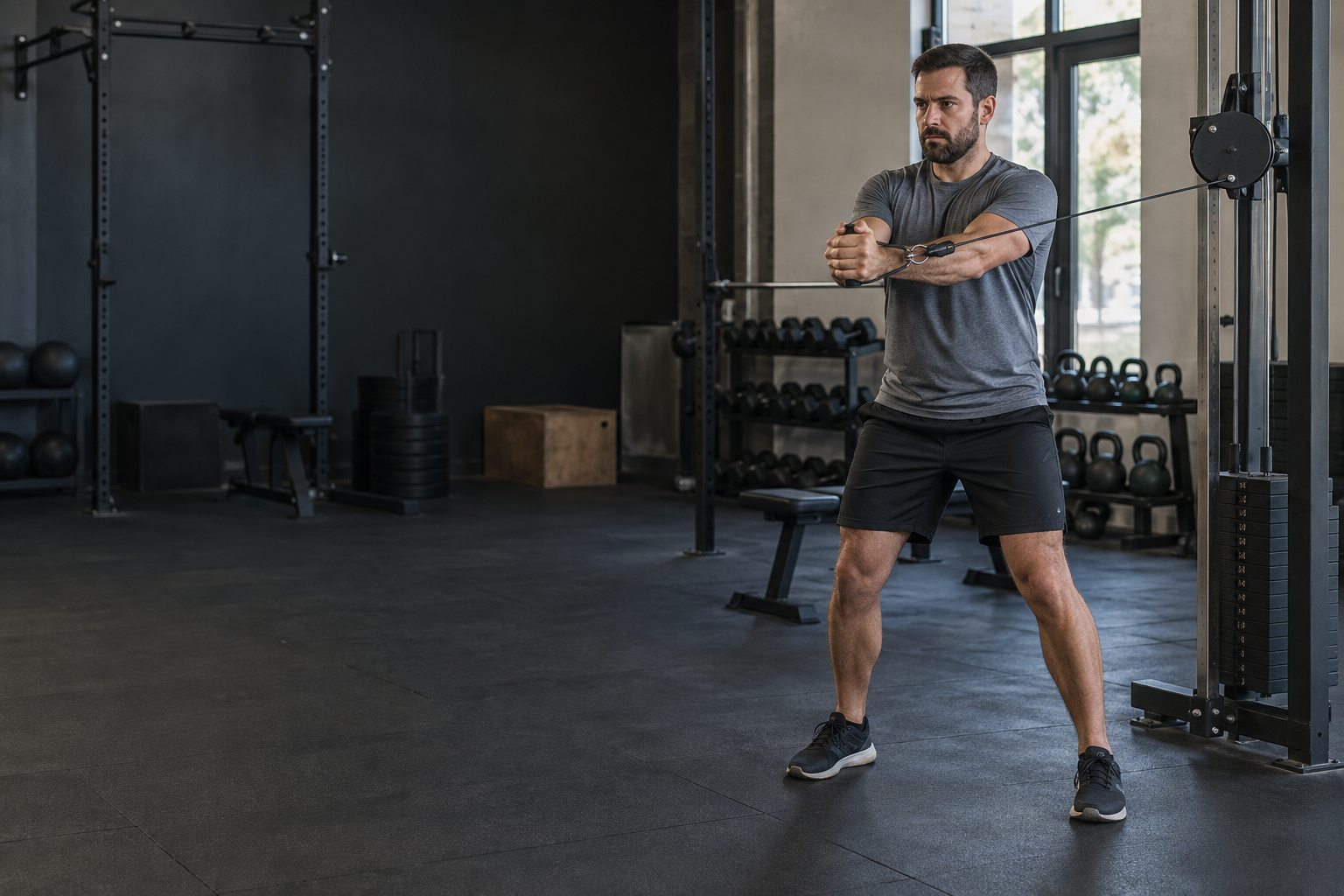
A Pallof press or controlled one-sided carry asks the trunk to remain steady against a rotational pull. Use enough resistance to create tension without twisting or leaning.
For a practical session, treat this as one part of the complete program. Core training is most useful when control, breathing, and repeatable positions matter more than speed or novelty. Use a manageable load, stop any movement that causes sharp pain, and seek qualified guidance when technique or discomfort is uncertain.
Train Side-to-Side Stability
Side planks and suitcase carries develop lateral stability. Keep the body stacked and choose a duration or load that allows controlled breathing.
Record the variation, setup, repetitions, resistance, and one useful technique note. On the next session, compare like with like before adding volume or changing exercises. FitForgeFlow can keep that plan visible so training time is spent performing rather than repeatedly rebuilding the workout.
Use Flexion Intentionally
Cable crunches or controlled floor crunches can belong in the plan. Treat them as one movement category, use a range you control, and avoid pulling aggressively on the neck.
For a practical session, treat this as one part of the complete program. Core training is most useful when control, breathing, and repeatable positions matter more than speed or novelty. Use a manageable load, stop any movement that causes sharp pain, and seek qualified guidance when technique or discomfort is uncertain.
Loaded Carries Build Useful Stability
Farmer and suitcase carries combine grip, posture, gait, and trunk control. Walk only where the space is clear and use a load that does not force hurried steps or leaning.
Record the variation, setup, repetitions, resistance, and one useful technique note. On the next session, compare like with like before adding volume or changing exercises. FitForgeFlow can keep that plan visible so training time is spent performing rather than repeatedly rebuilding the workout.
How to Progress Core Exercises
Add repetitions, time, range, or resistance gradually. A harder variation is appropriate only when the current version remains stable from the first repetition through the last.
For a practical session, treat this as one part of the complete program. Core training is most useful when control, breathing, and repeatable positions matter more than speed or novelty. Use a manageable load, stop any movement that causes sharp pain, and seek qualified guidance when technique or discomfort is uncertain.
How Often Should You Train Core?
Two to four brief exposures can fit many programs, but direct frequency depends on squats, hinges, presses, sport work, and recovery already present in the week.
Record the variation, setup, repetitions, resistance, and one useful technique note. On the next session, compare like with like before adding volume or changing exercises. FitForgeFlow can keep that plan visible so training time is spent performing rather than repeatedly rebuilding the workout.
Avoid Turning Core Work Into Cardio
Fast circuits can raise heart rate, but fatigue may remove the control the exercises are meant to train. Rest long enough to perform the next set deliberately.
For a practical session, treat this as one part of the complete program. Core training is most useful when control, breathing, and repeatable positions matter more than speed or novelty. Use a manageable load, stop any movement that causes sharp pain, and seek qualified guidance when technique or discomfort is uncertain.
Keep the Routine Repeatable
Choose one exercise from several useful functions, record the version and result, then repeat long enough to measure improvement. Variety should solve a need rather than erase comparison.
Record the variation, setup, repetitions, resistance, and one useful technique note. On the next session, compare like with like before adding volume or changing exercises. FitForgeFlow can keep that plan visible so training time is spent performing rather than repeatedly rebuilding the workout.