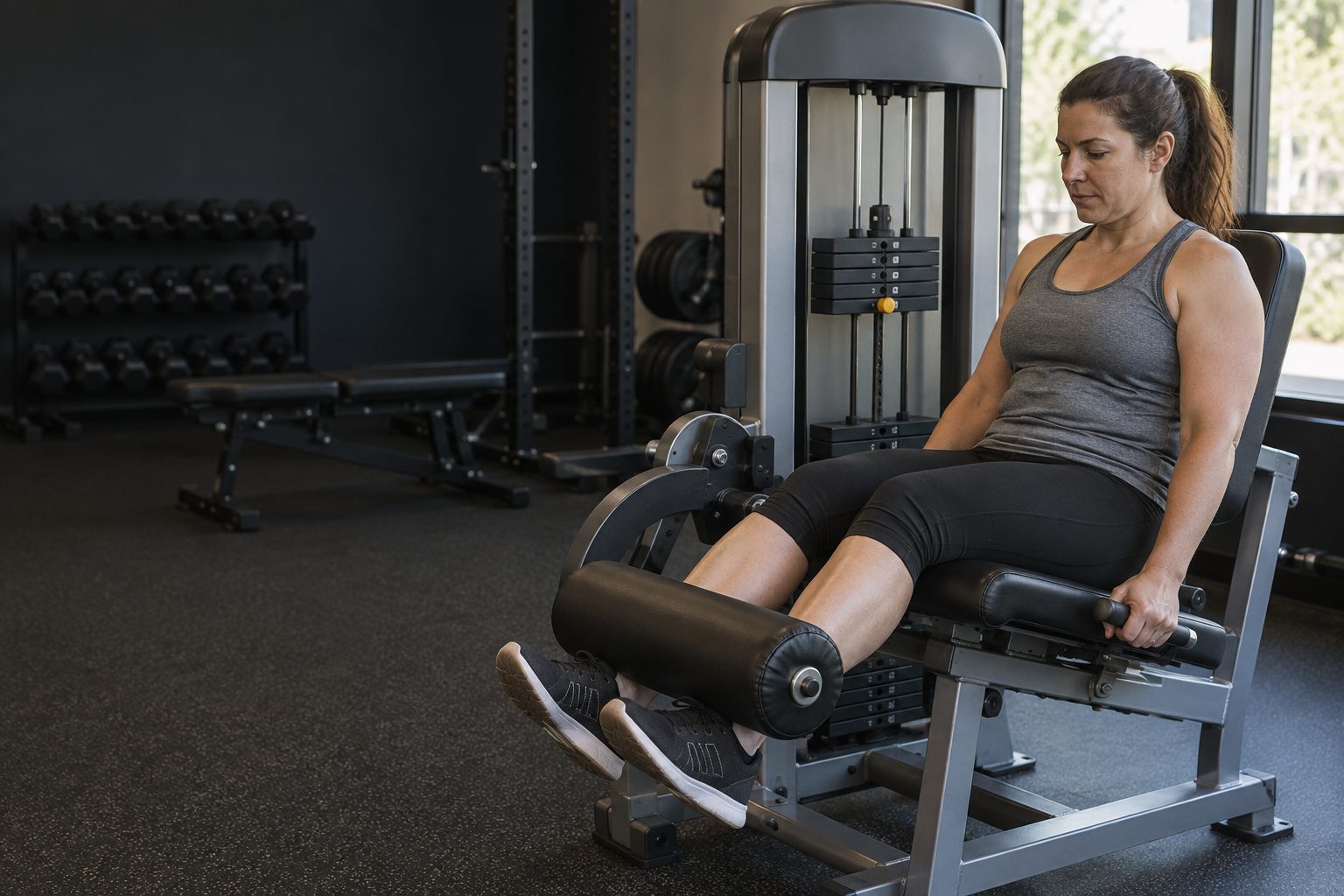
Use straight-knee and bent-knee raises with controlled, repeatable reps
Calf Training Is Simple but Easy to Rush
Calf raises use a straightforward ankle movement, yet short bouncing repetitions can remove much of the control. Treat the exercise like any other strength movement.
For a practical session, treat this as one part of the complete program. Lower-leg training rewards deliberate repetitions, consistent scheduling, and the same progression standards used elsewhere. Use a manageable load, stop any movement that causes sharp pain, and seek qualified guidance when technique or discomfort is uncertain.
Standing and Seated Raises Train Differently
Straight-knee raises and bent-knee seated raises emphasize the calf complex differently. Including one of each can provide a simple, balanced structure.
Record the variation, setup, repetitions, resistance, and one useful technique note. On the next session, compare like with like before adding volume or changing exercises. FitForgeFlow can keep that plan visible so training time is spent performing rather than repeatedly rebuilding the workout.
Use a Full, Controlled Rep
Lower under control into a comfortable stretch, press through the forefoot, and pause briefly near the top. Keep pressure distributed rather than rolling onto the outer foot.
For a practical session, treat this as one part of the complete program. Lower-leg training rewards deliberate repetitions, consistent scheduling, and the same progression standards used elsewhere. Use a manageable load, stop any movement that causes sharp pain, and seek qualified guidance when technique or discomfort is uncertain.
A Simple Beginner Calf Workout
One example is standing calf raises for three sets and seated calf raises for two or three sets. An optional single-leg bodyweight raise can be used when balance and control allow.
Record the variation, setup, repetitions, resistance, and one useful technique note. On the next session, compare like with like before adding volume or changing exercises. FitForgeFlow can keep that plan visible so training time is spent performing rather than repeatedly rebuilding the workout.
How Many Sets Do You Need?
Begin with four to six weekly working sets and adjust based on the complete program, recovery, and progress. More is not automatically necessary.
For a practical session, treat this as one part of the complete program. Lower-leg training rewards deliberate repetitions, consistent scheduling, and the same progression standards used elsewhere. Use a manageable load, stop any movement that causes sharp pain, and seek qualified guidance when technique or discomfort is uncertain.
Stop Bouncing Through Reps
Momentum can make the set look fast while reducing useful control. Use a load that allows the heel to move deliberately through the chosen range.
Record the variation, setup, repetitions, resistance, and one useful technique note. On the next session, compare like with like before adding volume or changing exercises. FitForgeFlow can keep that plan visible so training time is spent performing rather than repeatedly rebuilding the workout.
Add Load Gradually
First complete the target repetitions consistently. Then make the smallest practical increase and rebuild within the range.
For a practical session, treat this as one part of the complete program. Lower-leg training rewards deliberate repetitions, consistent scheduling, and the same progression standards used elsewhere. Use a manageable load, stop any movement that causes sharp pain, and seek qualified guidance when technique or discomfort is uncertain.
Where Calves Fit on Leg Day
Calves commonly follow larger leg exercises, but they can move earlier occasionally when they are repeatedly skipped or when the program makes them a priority.
Record the variation, setup, repetitions, resistance, and one useful technique note. On the next session, compare like with like before adding volume or changing exercises. FitForgeFlow can keep that plan visible so training time is spent performing rather than repeatedly rebuilding the workout.
What About Tibialis Work?
Toe raises or tibialis raises can train the front of the lower leg where appropriate. Start with bodyweight or light resistance and avoid forcing painful range.
For a practical session, treat this as one part of the complete program. Lower-leg training rewards deliberate repetitions, consistent scheduling, and the same progression standards used elsewhere. Use a manageable load, stop any movement that causes sharp pain, and seek qualified guidance when technique or discomfort is uncertain.
Repeat Consistently
Save the exact machine, foot setup, load, and repetitions. Calf training improves as a measurable plan, not as a few forgotten sets before leaving.
Record the variation, setup, repetitions, resistance, and one useful technique note. On the next session, compare like with like before adding volume or changing exercises. FitForgeFlow can keep that plan visible so training time is spent performing rather than repeatedly rebuilding the workout.