Give lower-leg training a real place, progression method, and weekly plan
Why Calves Get Treated Like an Afterthought
Calf work often appears after a demanding leg session, when time and attention are lowest. Inconsistent effort makes the exercise difficult to evaluate.
For a practical session, treat this as one part of the complete program. Lower-leg training rewards deliberate repetitions, consistent scheduling, and the same progression standards used elsewhere. Use a manageable load, stop any movement that causes sharp pain, and seek qualified guidance when technique or discomfort is uncertain.
Consistency Matters More Than One Brutal Session
A repeatable weekly dose provides better information than occasional high-volume sessions. Schedule the work on days when it can actually be completed.
Record the variation, setup, repetitions, resistance, and one useful technique note. On the next session, compare like with like before adding volume or changing exercises. FitForgeFlow can keep that plan visible so training time is spent performing rather than repeatedly rebuilding the workout.
Use Both Straight-Knee and Bent-Knee Work
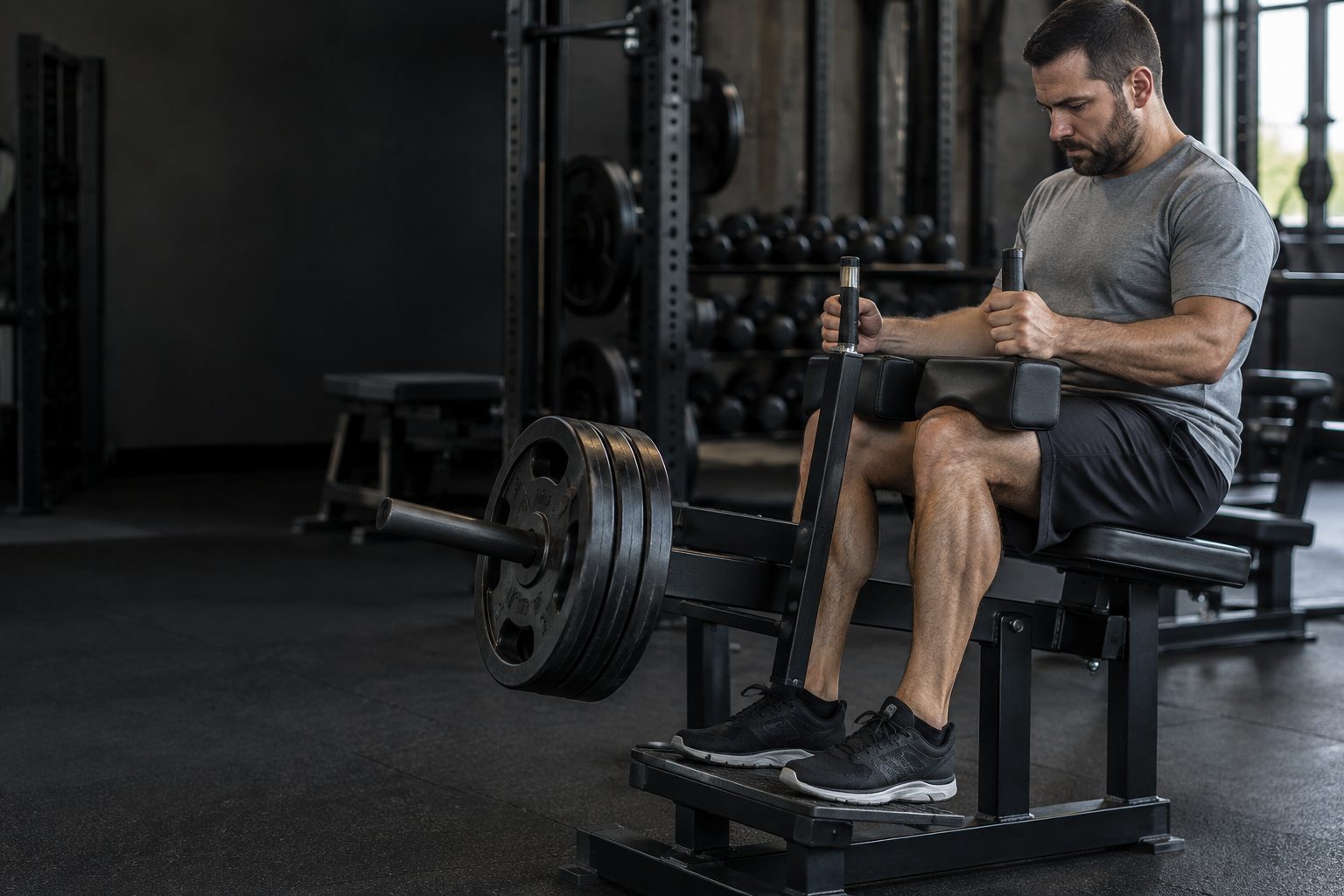
Standing and seated raises train the calf complex in complementary positions. Keep one version of each rather than collecting many machines.
For a practical session, treat this as one part of the complete program. Lower-leg training rewards deliberate repetitions, consistent scheduling, and the same progression standards used elsewhere. Use a manageable load, stop any movement that causes sharp pain, and seek qualified guidance when technique or discomfort is uncertain.
Slow Down the Rep
Control the lowering, use a comfortable stretch, and pause near the top. A slightly lighter load may produce more consistent repetitions than bouncing heavier weight.
Record the variation, setup, repetitions, resistance, and one useful technique note. On the next session, compare like with like before adding volume or changing exercises. FitForgeFlow can keep that plan visible so training time is spent performing rather than repeatedly rebuilding the workout.
Put Calves Earlier Sometimes
If calf training is always skipped, place it after the warm-up or between compatible exercises on selected days. Do not let it interfere with a higher-priority lift.
For a practical session, treat this as one part of the complete program. Lower-leg training rewards deliberate repetitions, consistent scheduling, and the same progression standards used elsewhere. Use a manageable load, stop any movement that causes sharp pain, and seek qualified guidance when technique or discomfort is uncertain.
Track Progress Like Any Other Muscle Group
Record the machine, setup, load, repetitions, and range. Machine leverage differs, so compare results on the same setup whenever possible.
Record the variation, setup, repetitions, resistance, and one useful technique note. On the next session, compare like with like before adding volume or changing exercises. FitForgeFlow can keep that plan visible so training time is spent performing rather than repeatedly rebuilding the workout.
Add Frequency Before Adding Chaos
A second brief weekly exposure may be more practical than doubling one exhausted session. Increase frequency gradually and monitor recovery.
For a practical session, treat this as one part of the complete program. Lower-leg training rewards deliberate repetitions, consistent scheduling, and the same progression standards used elsewhere. Use a manageable load, stop any movement that causes sharp pain, and seek qualified guidance when technique or discomfort is uncertain.
Do Not Ignore the Front of the Lower Leg
Tibialis raises can complement calf work where appropriate. Use controlled movement and a modest starting dose rather than treating them as a guaranteed fix for discomfort.
Record the variation, setup, repetitions, resistance, and one useful technique note. On the next session, compare like with like before adding volume or changing exercises. FitForgeFlow can keep that plan visible so training time is spent performing rather than repeatedly rebuilding the workout.
Recovery Still Matters
Calves also work during walking, running, sport, and other leg training. Persistent soreness or declining performance is a reason to review total workload.
For a practical session, treat this as one part of the complete program. Lower-leg training rewards deliberate repetitions, consistent scheduling, and the same progression standards used elsewhere. Use a manageable load, stop any movement that causes sharp pain, and seek qualified guidance when technique or discomfort is uncertain.
Give Calf Training an Actual Plan
Choose exercises, place them on the calendar, define a repetition range, and track them for several weeks. No routine guarantees growth, but a consistent plan can finally be assessed.
Record the variation, setup, repetitions, resistance, and one useful technique note. On the next session, compare like with like before adding volume or changing exercises. FitForgeFlow can keep that plan visible so training time is spent performing rather than repeatedly rebuilding the workout.