A few well-chosen movements, performed consistently, cover the glutes without needing a long, complicated routine.
Bridge or Hip-Thrust Pattern
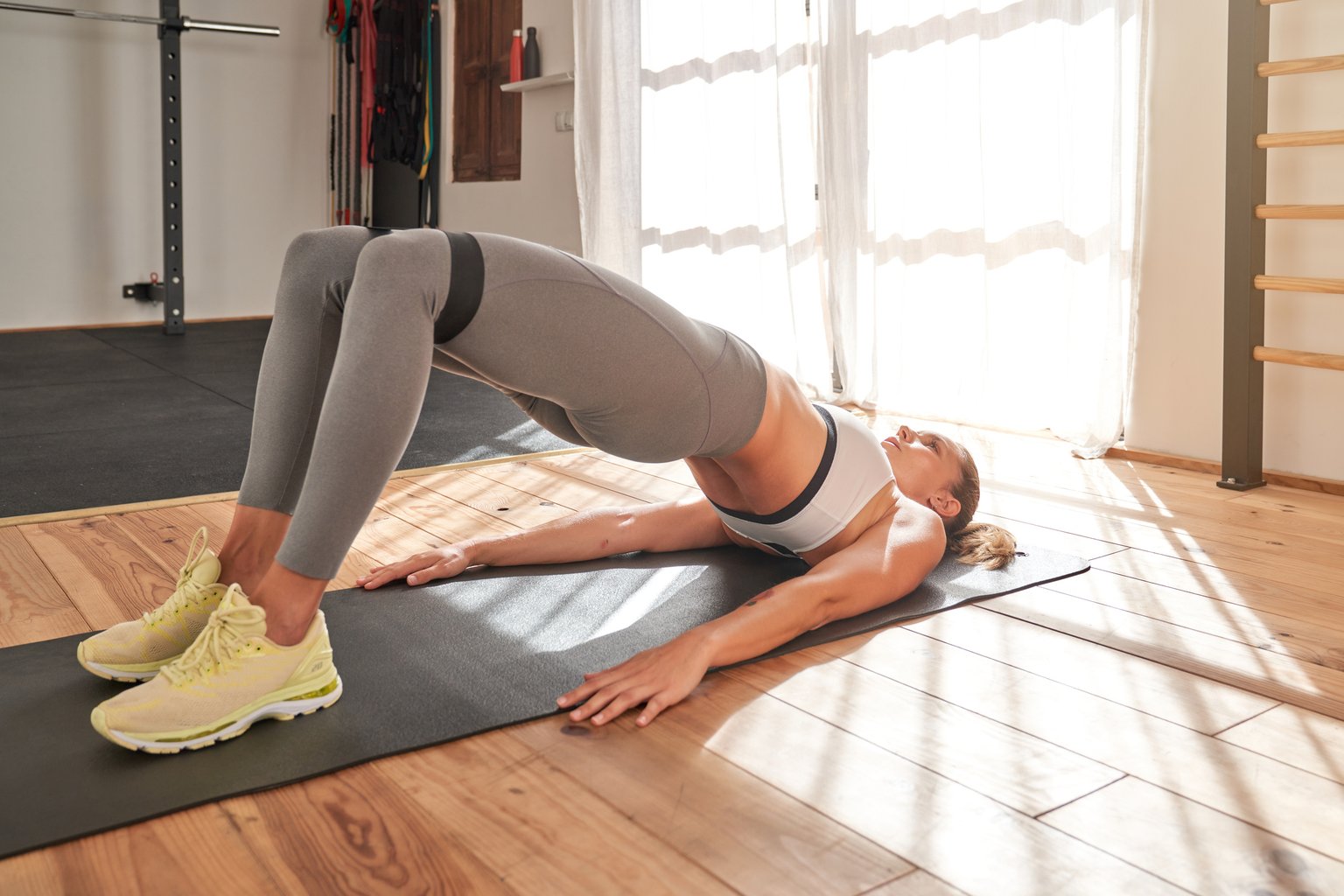
A glute bridge or hip thrust, lying on your back and lifting your hips, directly targets the glutes through hip extension. This is a foundational glute exercise and a reasonable starting point whether you are at home or at the gym.
Home: a bodyweight glute bridge, or a bridge with a resistance band around your thighs for added challenge.
Gym: a barbell or machine hip thrust, using a bench for elevated support.
Squat or Split-Squat Pattern
A squat variation involves the glutes alongside the quads, making it a useful complement to a more glute-isolated movement like the bridge. A split-squat or lunge variation adds a single-leg component that some people find especially effective for the glutes.
Home: a bodyweight squat or reverse lunge.
Gym: a goblet squat, a leg press, or a walking lunge with dumbbells.
A short, focused glute session covering a bridge, a squat, and a hinge is enough for a genuinely useful workout.
Hinge Pattern
A hip hinge, such as a Romanian deadlift, involves the glutes and hamstrings together through a bending-at-the-hips motion. This pattern complements the bridge and squat by working the glutes from a different angle and loading style.
Home: a single-leg deadlift using bodyweight or light dumbbells, or a bodyweight hip hinge.
Gym: a dumbbell or barbell Romanian deadlift.
Optional Abduction or Accessory Movement
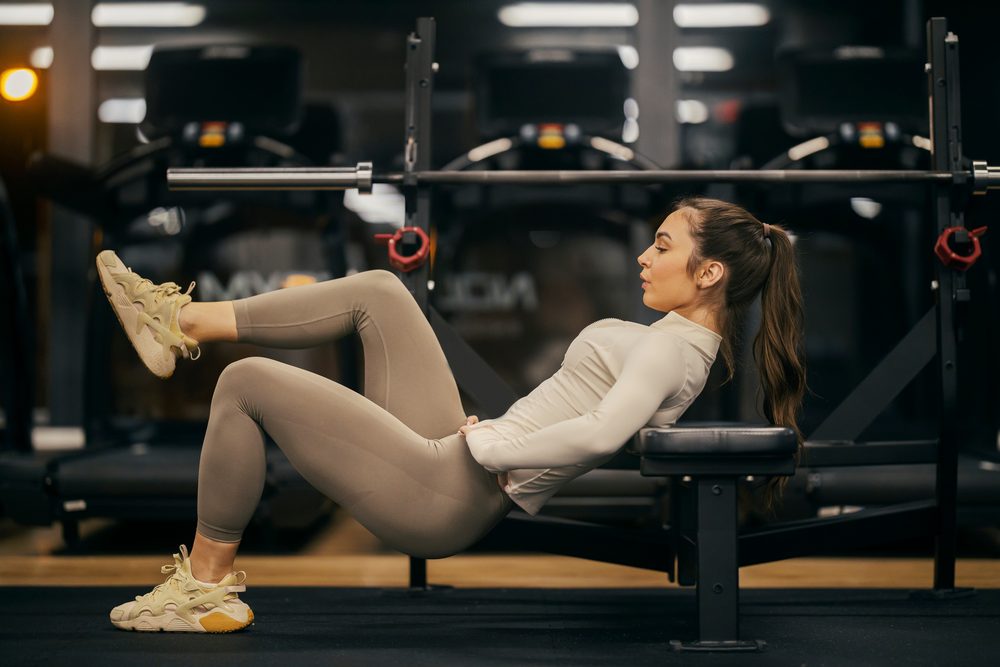
If time allows, a side-lying leg raise, a banded lateral walk, or a cable or machine abduction exercise can add some variety by working the glutes from a slightly different direction. This is genuinely optional and not required for a worthwhile session.
Simple Sets and Reps
A reasonable structure is 3 sets of 10 to 15 reps for the bridge or hip thrust, 3 sets of 10 to 12 for the squat pattern, and 2 to 3 sets of 8 to 12 for the hinge, with 45 to 90 seconds of rest between sets depending on how demanding each exercise feels.
How to Choose Resistance
Start with a weight, or bodyweight alone, that lets you complete each set with full control and a complete range of motion. If your range of motion shrinks or your form noticeably breaks down before the end of a set, the resistance is likely too much for right now.
How to Progress Gradually
Once your current resistance feels consistently controlled across all your sets, a small increase in weight, an additional set, or a more demanding variation, such as moving from a two-leg bridge to a single-leg version, are all reasonable next steps.
What to Do When an Exercise Is Unavailable
If your planned equipment is occupied or unavailable, a different exercise targeting the same pattern, a different squat variation for a squat, for example, keeps your session on track without needing to wait or improvise something unrelated.
Keeping the Session From Becoming a Long Leg Workout
It can be tempting to add more and more leg exercises once you are already warmed up. For a focused 20-minute glute session, sticking to the three main patterns, plus an optional accessory movement, keeps the workout efficient and repeatable rather than turning into an unplanned, much longer leg day.
The Takeaway
A 20-minute glute workout built around a bridge, a squat pattern, and a hinge covers the major movements that train the glutes effectively, whether you are at home or at the gym. Keep it focused, progress gradually, and let consistency do the work over time.
Stop guessing. Start training.