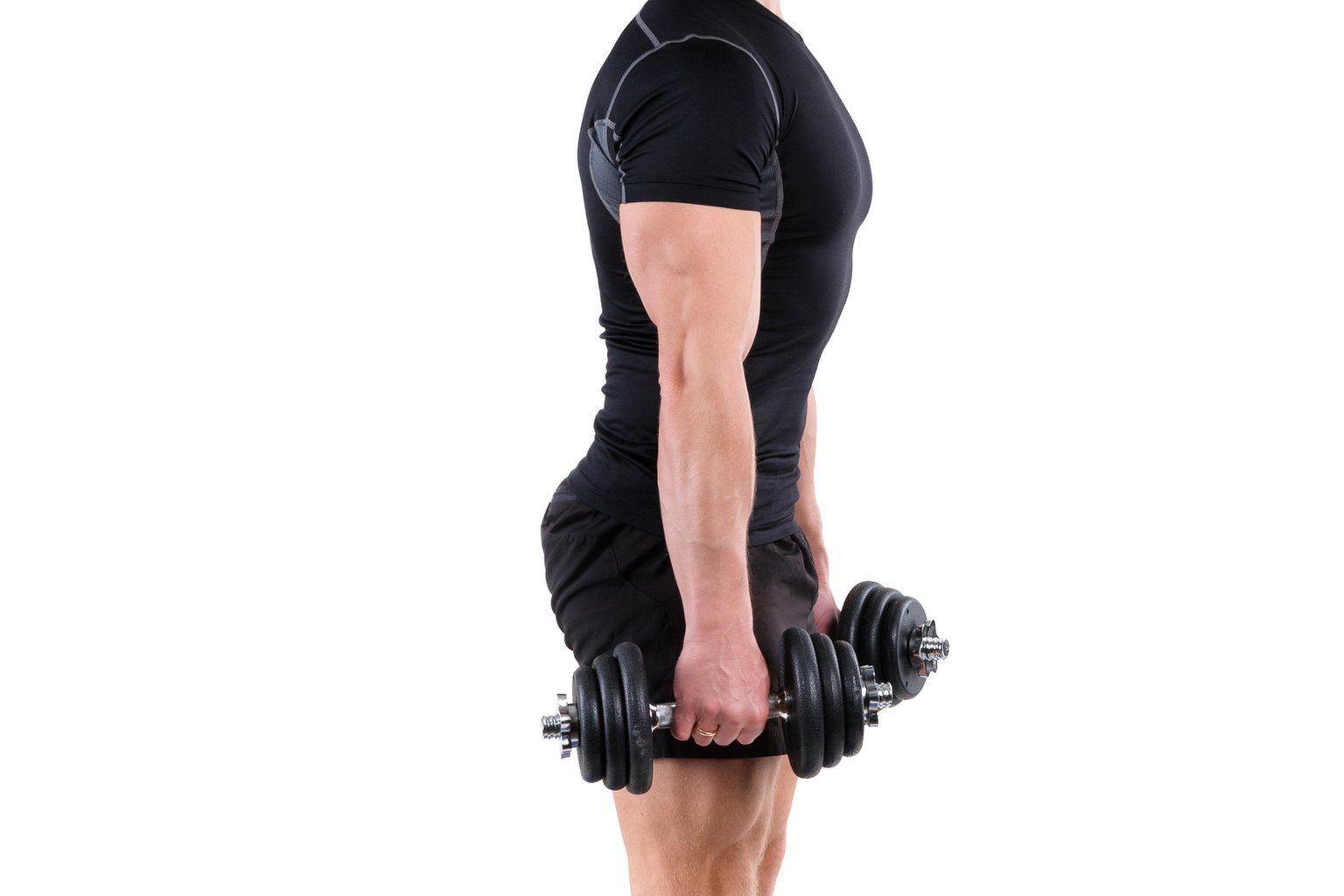
When a calf raise starts feeling easy, weight is not the only dial you can turn.
1. Adding Repetitions Within a Sensible Range
Before reaching for more weight, increasing your repetition count at the same resistance is a simple, accessible way to add challenge. Once a higher rep count starts to feel very manageable, that is a reasonable signal that other forms of progression are worth considering too.
2. Adding Resistance
This is the most familiar progression: holding dumbbells, using a calf raise machine, or adding weight to a loaded setup. It remains a straightforward, effective option, but it is only one of several ways to make the exercise more demanding.
3. Increasing Control and Tempo
Slowing down the lowering phase of a calf raise, or pausing briefly at the top and bottom of the movement, increases the time your calves spend under tension without requiring any additional weight. This is a genuinely useful progression, especially for a smaller muscle group that can be harder to overload with weight alone.
Weight is one way to progress a calf raise. Tempo, range, and stability are three more.
4. Using a Greater Usable Range Where Comfortable
Performing the movement from a slightly elevated surface, such as a step or plate, can allow a greater range of motion, stretching further at the bottom of the movement, for those who find this comfortable. This is not necessary for everyone and should only be pursued within a genuinely comfortable range, not forced.

5. Progressing Toward Single-Leg Versions
A single-leg calf raise asks more of both strength and balance than a two-leg version at the same relative effort. This is often a more advanced progression and is best approached once the two-leg version feels well controlled and genuinely manageable.
A Brief Note on Straight-Knee vs. Bent-Knee Variations
A straight-knee calf raise and a bent-knee variation, such as a seated calf raise, emphasize the calf muscles somewhat differently due to the angle of the knee. Including both over time is a reasonable approach, though neither is required for a basic, effective calf-training routine.
Stability and Support
Holding onto something stable, such as a wall or a machine's handles, can help you focus purely on the calf raise itself, especially while learning single-leg variations or working on balance. Using support is a reasonable choice, not a sign that the exercise is being done incorrectly.
Choosing a Progression That Still Allows Controlled Reps
Whichever method you choose, the standard for whether it is an appropriate progression is the same: you should still be able to perform the movement with control. If a progression causes you to bounce, lose balance consistently, or significantly shorten your range of motion, it is a reasonable sign to scale back to the previous level.
When Not to Progress Yet
If your current calf raise still shows inconsistent control, noticeable wobbling, or a limited range of motion, that is a reasonable sign to continue at the current level rather than adding another layer of difficulty. There is no set timeline for when to progress; readiness is a better guide than a fixed schedule.
Common Mistakes
Bouncing through repetitions. Using momentum to bounce out of the bottom position reduces how much control and tension the muscle actually experiences.
Rushing to single-leg versions too early. Attempting the more demanding variation before the basic version is well controlled tends to produce poor form rather than genuine progress.
Assuming calf soreness is necessary for results. Soreness is not a reliable measure of whether a session was productive.
Simple Home and Gym Examples
At home: standing bodyweight calf raises, progressing to a slower tempo, then to single-leg versions holding onto a wall for balance.
At the gym: a calf raise machine or standing dumbbell calf raises, progressing through added weight, then slower tempo, then single-leg variations as control allows.
The Takeaway
Calf raises can be progressed in more ways than simply adding weight. Repetitions, tempo, range of motion, and single-leg variations all offer legitimate paths forward, and choosing the one that still allows controlled, well-executed repetitions is more useful than chasing any single method by default.
Stop guessing. Start training.