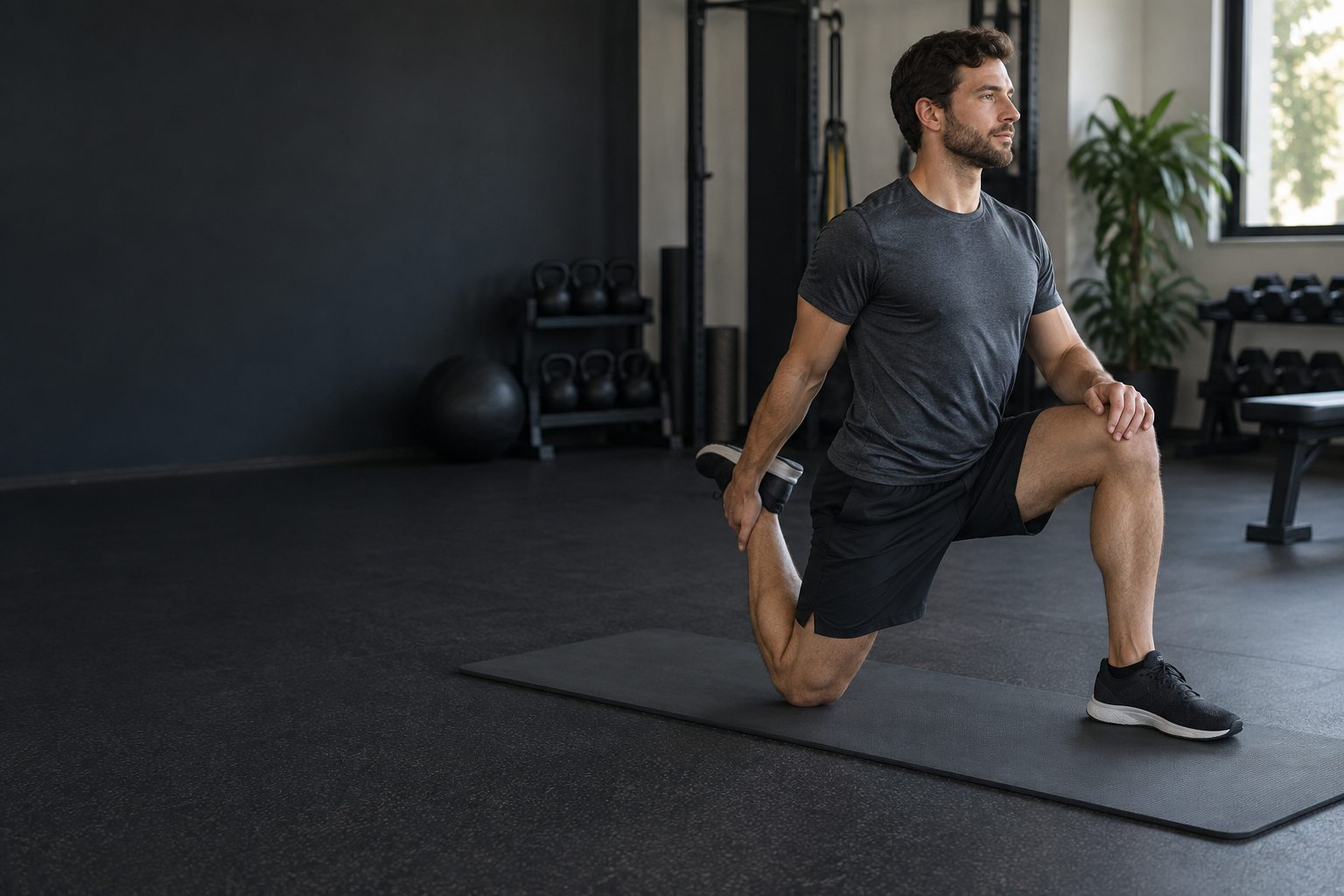
Use eight to ten gentle minutes without turning mobility into a competition
Stiff Does Not Automatically Mean Something Is Wrong
Temporary stiffness can follow unfamiliar activity, long sitting, or a demanding session. A gentle routine may feel useful, but it is not diagnosis or treatment.
For a practical session, treat this as one part of the complete program. Recovery and mobility support training; they are not punishments, competitions, or substitutes for qualified care. Use a manageable load, stop any movement that causes sharp pain, and seek qualified guidance when technique or discomfort is uncertain.
Mobility Is Not a Competition
The goal is comfortable, controlled movement, not matching another person's range. Breathe normally and stop before a position becomes sharp, numb, or alarming.
Record the variation, setup, repetitions, resistance, and one useful technique note. On the next session, compare like with like before adding volume or changing exercises. FitForgeFlow can keep that plan visible so training time is spent performing rather than repeatedly rebuilding the workout.
A Simple 8–10 Minute Routine
Move through 90/90 hip switches, a half-kneeling hip-flexor stretch, thoracic rotations, wall slides, a gentle hamstring stretch, and a calf stretch. Thirty to sixty seconds per area is one option.
For a practical session, treat this as one part of the complete program. Recovery and mobility support training; they are not punishments, competitions, or substitutes for qualified care. Use a manageable load, stop any movement that causes sharp pain, and seek qualified guidance when technique or discomfort is uncertain.
Hips
Use slow 90/90 switches within a range you control, then settle into a supported half-kneeling position. Keep movement gentle instead of forcing the pelvis forward.
Record the variation, setup, repetitions, resistance, and one useful technique note. On the next session, compare like with like before adding volume or changing exercises. FitForgeFlow can keep that plan visible so training time is spent performing rather than repeatedly rebuilding the workout.
Upper Back
A side-lying or quadruped thoracic rotation can introduce comfortable upper-back movement. Let the eyes follow the hand without turning it into a lower-back twist.
For a practical session, treat this as one part of the complete program. Recovery and mobility support training; they are not punishments, competitions, or substitutes for qualified care. Use a manageable load, stop any movement that causes sharp pain, and seek qualified guidance when technique or discomfort is uncertain.
Shoulders
Wall slides combine shoulder movement with rib control. Shorten the range if the arms cannot stay comfortable against or near the wall.
Record the variation, setup, repetitions, resistance, and one useful technique note. On the next session, compare like with like before adding volume or changing exercises. FitForgeFlow can keep that plan visible so training time is spent performing rather than repeatedly rebuilding the workout.
Hamstrings
Use a supported standing or seated position with a soft knee. Hinge gently at the hip rather than rounding aggressively to reach the toes.
For a practical session, treat this as one part of the complete program. Recovery and mobility support training; they are not punishments, competitions, or substitutes for qualified care. Use a manageable load, stop any movement that causes sharp pain, and seek qualified guidance when technique or discomfort is uncertain.
Calves
Place the foot flat and move forward until a mild calf stretch appears. A bent-knee variation changes emphasis without needing extreme range.
Record the variation, setup, repetitions, resistance, and one useful technique note. On the next session, compare like with like before adding volume or changing exercises. FitForgeFlow can keep that plan visible so training time is spent performing rather than repeatedly rebuilding the workout.
How Hard Should You Stretch?
Aim for mild to moderate tension that allows calm breathing. More discomfort does not guarantee more useful mobility, and bouncing is unnecessary.
For a practical session, treat this as one part of the complete program. Recovery and mobility support training; they are not punishments, competitions, or substitutes for qualified care. Use a manageable load, stop any movement that causes sharp pain, and seek qualified guidance when technique or discomfort is uncertain.
When to Skip Mobility and Seek Qualified Care
Sharp pain, sudden weakness, numbness, neurological symptoms, significant swelling, or concerning symptoms should not be treated with generic stretching advice.
Record the variation, setup, repetitions, resistance, and one useful technique note. On the next session, compare like with like before adding volume or changing exercises. FitForgeFlow can keep that plan visible so training time is spent performing rather than repeatedly rebuilding the workout.