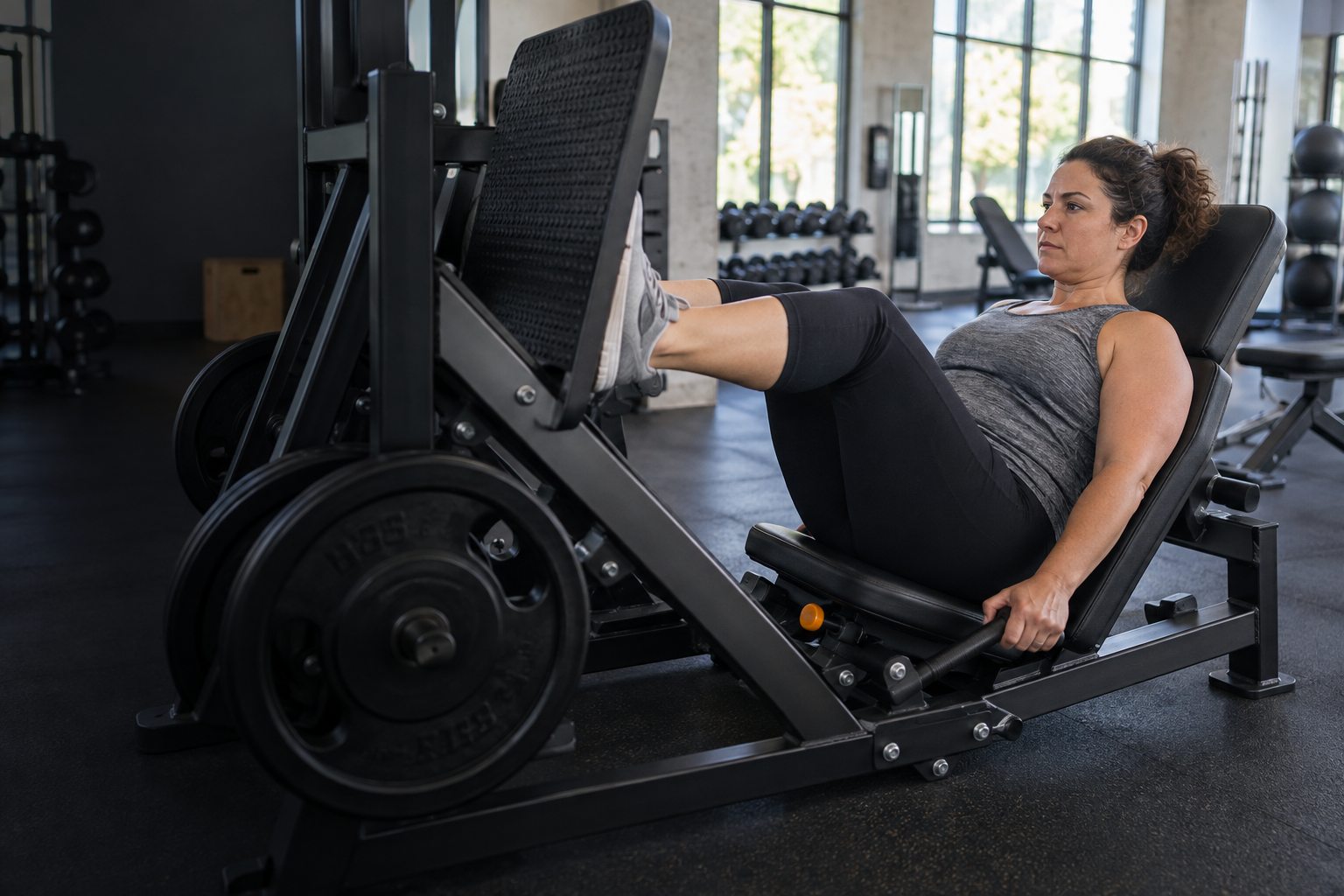
You reach the end of a set, the weight feels spent, and instead of stopping there, you drop to a lighter load and keep going. That is the basic idea behind a drop set, a technique that shows up often in more advanced routines and occasionally causes confusion about whether beginners are missing out by not using it.
The short answer is that beginners are not missing much, since the fundamentals matter far more than any single intensity technique.
This guide explains what a drop set is, why some people use it, and why it is entirely optional rather than essential. It is general education, not an individualized plan, and no technique here is required for good results.
None of the information here requires trying the technique yourself. Understanding it is enough to make an informed choice either way.
A Normal Working Set, Then a Drop
A drop set starts like any other set: you perform repetitions at a chosen weight until you are close to your limit for that set. Instead of resting there, you immediately reduce the weight, usually by a modest amount, and continue for more repetitions with little or no rest.
The result is one extended effort made up of two or more segments at decreasing weights, rather than a single clean set followed by a normal rest period.
From the outside, a drop set can look like one long, continuous effort, even though it is really a sequence of shorter segments strung together.
Immediately Reducing the Load
The drop itself is meant to happen quickly, since the point is to keep the working muscle under continuous demand. On a machine, this often means moving a pin down a notch or two. With dumbbells, it usually means having a lighter pair within easy reach beforehand.
Planning the weight change in advance, rather than figuring it out mid-set, keeps the technique smooth and avoids a long pause that defeats the purpose.
Some lifters set two or three dumbbell pairs down in advance specifically so the transition between weights takes only a second or two.
Continuing With Lighter Weight
Once the weight drops, you continue repetitions until you reach a similar level of effort again. Some drop sets stop there, and others drop a second or third time, extending the set further.
Each additional drop tends to add less than the one before it, since the muscle is progressively more fatigued by that point.
Most drop sets stop after one or two drops, since additional drops beyond that tend to add fatigue faster than they add useful work.
Why It Can Feel Effective
Drop sets ask a muscle to keep working past the point where a normal set would have ended, which many people experience as an intense, unmistakable sensation of fatigue. That feeling can be satisfying, and it is one reason the technique has a devoted following.
A strong sensation is not the same as proof of superior results, and drop sets are one tool among several rather than an automatically better approach.
How a set feels and how effective it actually is are related, but they are not the same thing, and it is easy to confuse the two.
Why It Can Be Time-Efficient
Because a drop set packs additional work into what would otherwise be the end of a single set, it can let you accomplish more in less total time than performing separate sets with full rest between them.
This makes it appealing on busy days, or as a way to finish an exercise before you move on to the next station.
This can be a reasonable trade when your schedule is tight and you would rather do one thorough exercise than two rushed ones.
Not Every Exercise Needs It
Drop sets tend to work best on exercises where reducing the weight is quick and safe, such as machines, cables, and dumbbells. They are far less practical on a loaded barbell, where changing plates mid-set is slow and can disrupt the flow entirely.
Loading and unloading plates mid-set also raises practical safety considerations that machines and dumbbells simply do not have.
It also makes little sense to use a drop set on every exercise in a session. Reserving it for one or two movements, often toward the end of a workout, is a more common and manageable approach.
Trying to apply the technique everywhere in a single workout tends to produce an unusually exhausting session without a clear additional benefit.
Beginners Do Not Need to Build Around It
Learning solid technique and building a consistent habit matters far more for a new lifter than adding an intensity technique like this one. Our guide on training to failure explains why pushing to the edge of effort is not a requirement, especially early on.
A drop set will still be there to try later. There is no advantage to rushing into it before the basics feel comfortable.
Solid technique on a straightforward set will do more for a new lifter than an intensity technique performed with shaky form.
Machines vs. Dumbbells in Practice
On a machine, drop sets are usually simple to execute since the weight adjusts with a pin. With dumbbells, you need a second, lighter pair within reach, which works best in a home setup or a gym that is not too crowded around that area.
If reaching a lighter weight quickly is not practical in your gym at a given moment, it is entirely reasonable to skip the technique that day and simply finish your set as planned.
There is no obligation to force the technique in if the setup is not convenient in the moment.
Fitting It Into a Reasonable Amount of Volume
Because a drop set adds meaningful extra fatigue, it is worth counting toward your overall session demand rather than treating it as a free addition. Our guide on too much workout volume explains how added intensity techniques can quietly push a session past what is useful.
Using a drop set on one or two exercises, rather than throughout an entire workout, keeps the added fatigue in a reasonable range, especially once you account for it alongside your usual set count for that exercise.
Notice how you recover after a session that included a drop set, and use that as a guide for how often to include it going forward.
A Tool for Later, Not a Requirement Now
If you are curious to try a drop set, our Drop Set technique page walks through the format in more detail alongside FitForgeFlow's other training techniques. It is a fine addition once your foundational habits are solid.
Reading about the format ahead of time also makes it easier to try smoothly on your first attempt, rather than figuring it out mid-set.
Until then, straightforward sets performed with good technique and consistent effort will keep building progress just as effectively.
There is no ticking clock on when you need to start using more advanced techniques, and no downside to waiting until you are genuinely curious.