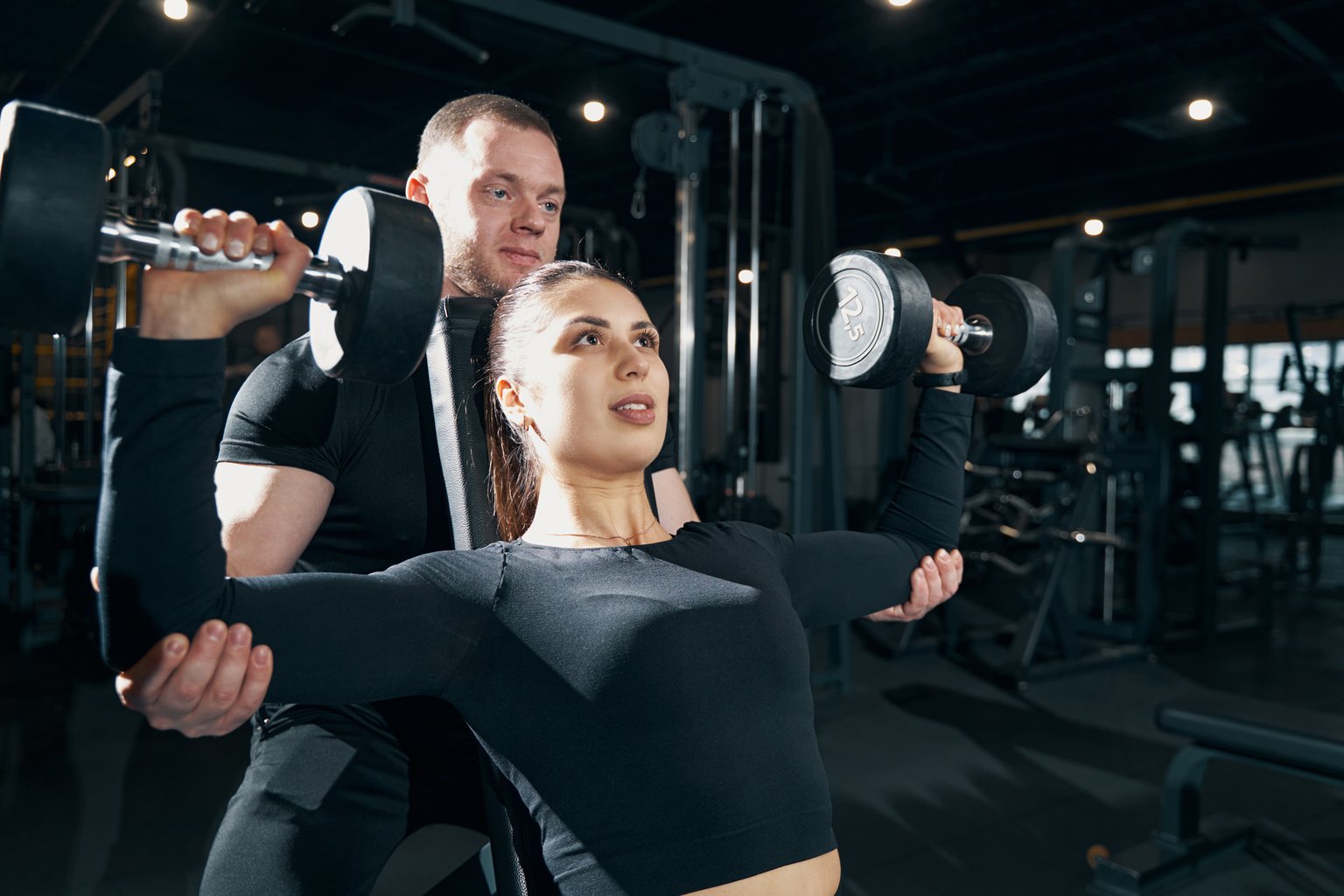
Shoulders respond well to a small number of exercises done with care, not a long list done in a hurry.
The Basic Role of the Shoulders
Your shoulders are heavily involved in pressing movements, where you push weight away from your body, and in raising movements, where you lift weight out to the side or in front of you. Both patterns are useful and complementary, and a beginner routine benefits from including a bit of each.
Front, Side, and Rear Involvement in Plain Language
The shoulder muscle group is generally described in three parts: the front, which is heavily involved in pressing and forward raises; the side, which is the main driver of lateral raises; and the rear, which plays a role in rowing and pulling movements. You do not need to memorize this to train effectively, but it helps explain why different exercises feel like they target slightly different areas.
Starting With a Small Number of Exercises
Two to three shoulder exercises are enough for a beginner routine. A press, a lateral raise, and some rear-shoulder work covers the major patterns without requiring you to learn an overwhelming list of movements at once.
A small number of well-controlled shoulder exercises will do more for you than a long list rushed through.
Choosing Manageable Resistance
Shoulders are a smaller, more easily fatigued muscle group than legs or back, and they generally respond well to lighter loads performed with good control. Starting conservative and building up gradually tends to work better here than it might for larger muscle groups.
Controlled Repetitions
A controlled shoulder repetition moves through a comfortable range without using momentum from your legs, hips, or torso to help lift the weight. This matters more for shoulders than for some other muscle groups, since the joint is more mobile and less stable than, for example, the hip.

Overhead Press Options
A seated or standing overhead press, using dumbbells or a machine, is a foundational shoulder pressing movement. A seated version offers more back support for beginners, while a standing version adds a core-stability demand. Either is a reasonable starting point.
Lateral Raise Options
A lateral raise, lifting weights out to the sides to roughly shoulder height, targets the side shoulder directly. Light dumbbells are generally sufficient here; this is an exercise where moderate weight with good control tends to feel and work better than heavier weight with poor control.
Rear-Delt Work
Reverse flyes or face pulls target the rear shoulder and also support healthy shoulder balance alongside pressing movements. Including some rear-shoulder work, even briefly, rounds out a beginner shoulder routine.
Machine vs. Dumbbell Options
Machines generally offer a more guided movement path, which can make them a comfortable starting point, while dumbbells allow more natural movement and work each side independently. Neither is required over the other; choosing what is available and comfortable is a reasonable approach.
A Simple Beginner Workout Structure
A reasonable beginner shoulder session might include: 3 sets of an overhead press, 3 sets of lateral raises, and 2 to 3 sets of rear-delt work, each in a rep range of roughly 10 to 15, with 60 to 90 seconds of rest between sets.
Common Mistakes
Going too heavy too soon. This is one of the more common shoulder-training mistakes, and it tends to compromise control before it builds real strength.
Using excessive momentum. Swinging the weight up using your body, rather than lifting it with your shoulder muscles, reduces the benefit of the exercise.
Skipping rear-shoulder work entirely. Focusing only on pressing and lateral raises leaves out a useful part of a balanced shoulder routine.
How to Progress Gradually
Once your current weight feels consistently controlled across all your sets, a small increase is a reasonable next step. Progress in shoulders tends to come in smaller increments than larger muscle groups, and that is a normal, expected pattern, not a sign of slow progress.
The Takeaway
Shoulder training rewards a careful, controlled approach more than almost any other muscle group. Choose a small number of exercises, keep the resistance manageable, and let your control guide your progression.
Stop guessing. Start training.