Three clear movement patterns are enough for a useful starting session
What Chest Day Is Actually Training
Chest training mainly uses pressing and bringing the arms across the body. Pressing also involves the triceps and front of the shoulders, which is why one chest session does not need a separate exercise for every sensation.
A simple plan lets beginners practice stable movement, learn an appropriate range, and repeat the same exercises long enough to improve control.
You Do Not Need Ten Exercises
More exercises do not guarantee better training. Several nearly identical presses can add fatigue without adding a clear purpose.
Begin with one primary press, one second angle, and one controlled isolation movement. Optional triceps work can fit where appropriate in the broader program.
The Main Chest Movement Patterns
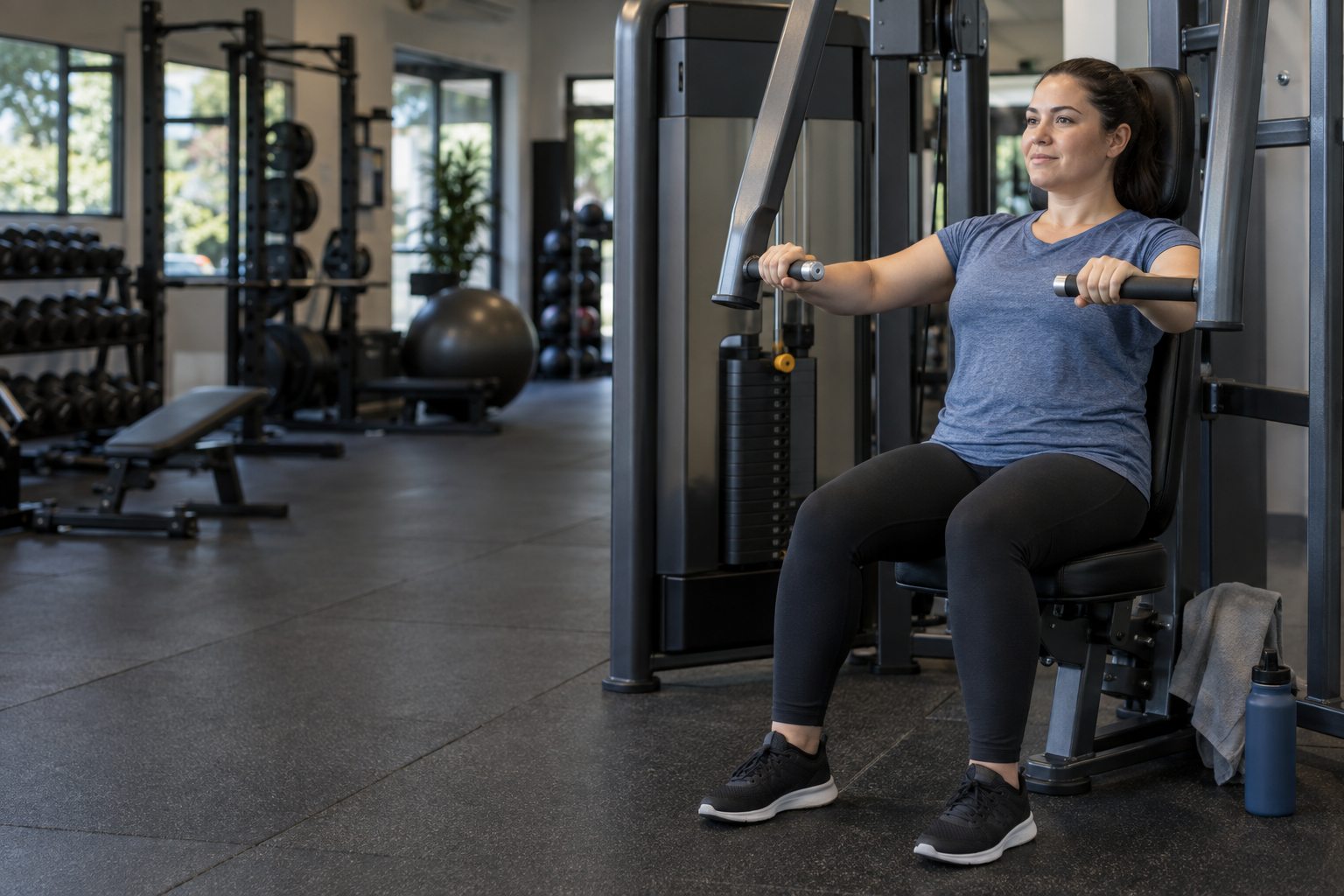
A horizontal press can be a machine chest press, push-up, dumbbell press, or bench press. An incline press changes the angle. A cable fly or pec deck trains the chest through an arm-closing pattern with less elbow extension.
These categories offer variety without requiring every version in one day. Choose exercises that fit your experience and equipment.
A Simple Beginner Chest Day
One general example is: machine chest press or bench press for three manageable sets; incline dumbbell press for two or three sets; cable fly or pec deck for two controlled sets; and an optional triceps pressdown for two sets.
This is an example, not an individualized prescription. Warm up appropriately, use controlled repetitions, and seek qualified guidance if setup or technique is unclear.
How Many Sets Should a Beginner Do?
A modest amount of focused work is enough to learn from. Two or three working sets per movement can provide a clear starting point without making the session unnecessarily long.
Your overall weekly program matters more than one isolated day. Chest may also receive work in full-body or upper-body sessions, so count the complete week before adding more.
How Heavy Should You Go?
Use a load you can control while keeping a few good repetitions in reserve. The last repetitions may feel challenging, but the movement should not turn into bouncing, twisting, or a shortened range you cannot control.
Sharp pain is a reason to stop and reassess. It is not a signal to force the set.
Rest Between Sets
Rest long enough to repeat the exercise with stable technique. Many beginners do well with roughly one to two minutes for moderate work and longer when a challenging press requires it.
The timer is a guide, not a race. If breathing and setup are not ready, a few extra seconds are more useful than a rushed set.
What If the Bench Is Taken?
Use a machine chest press or dumbbell variation when it is an appropriate substitute, change the order, or complete another planned movement and return later.
The replacement should keep the horizontal pressing purpose. For more time-saving strategies, see Only Have 30 Minutes?.
Common Beginner Mistakes
Avoid loading the bar before learning the setup, letting the shoulders roll forward without control, changing the workout every visit, or adding multiple fly variations because they feel different.
A qualified trainer can help with bench setup and spotting. Choose the machine option when it makes the movement easier to learn independently.
Putting the Example Into Practice
Before the first working set, use a brief general warm-up and lighter practice sets for the primary press. Adjust the seat or bench so the handles or weights begin in a comfortable pressing position.
Move through the press, incline variation, and fly pattern in that order unless equipment requires a sensible change. Record the machine setting or bench angle when it will help you repeat the setup.
If time is limited, keep the main press and one supporting movement rather than rushing through every listed exercise. The optional triceps work is the first item to remove when it does not fit the broader plan.
When all target repetitions are controlled, consider a small increase at a future session. Do not increase load and volume simultaneously just to make the workout feel advanced.
Review how the chest, shoulders, and elbows feel during and after training. Normal effort is different from sharp pain. Stop a painful movement and seek qualified guidance where appropriate.
Save the Workout and Repeat It
Record the exercises, resistance, repetitions, and useful notes. Repeat the workout for several sessions before changing it without a reason.
You can begin with a premade template and save a personal version. Premade Workouts vs. Create Your Own explains how to choose that path.