Understand vertical pulls, rows, and upper-back support in plain language
Why Back Training Feels Confusing at First
The back includes several muscles that are difficult to see while training. Exercise names can also describe equipment rather than the movement, which makes a long list feel more complicated than it is.
Start with two directions: pulling from overhead and pulling from in front of you. Add limited upper-back support work when it fits.
Vertical Pulling
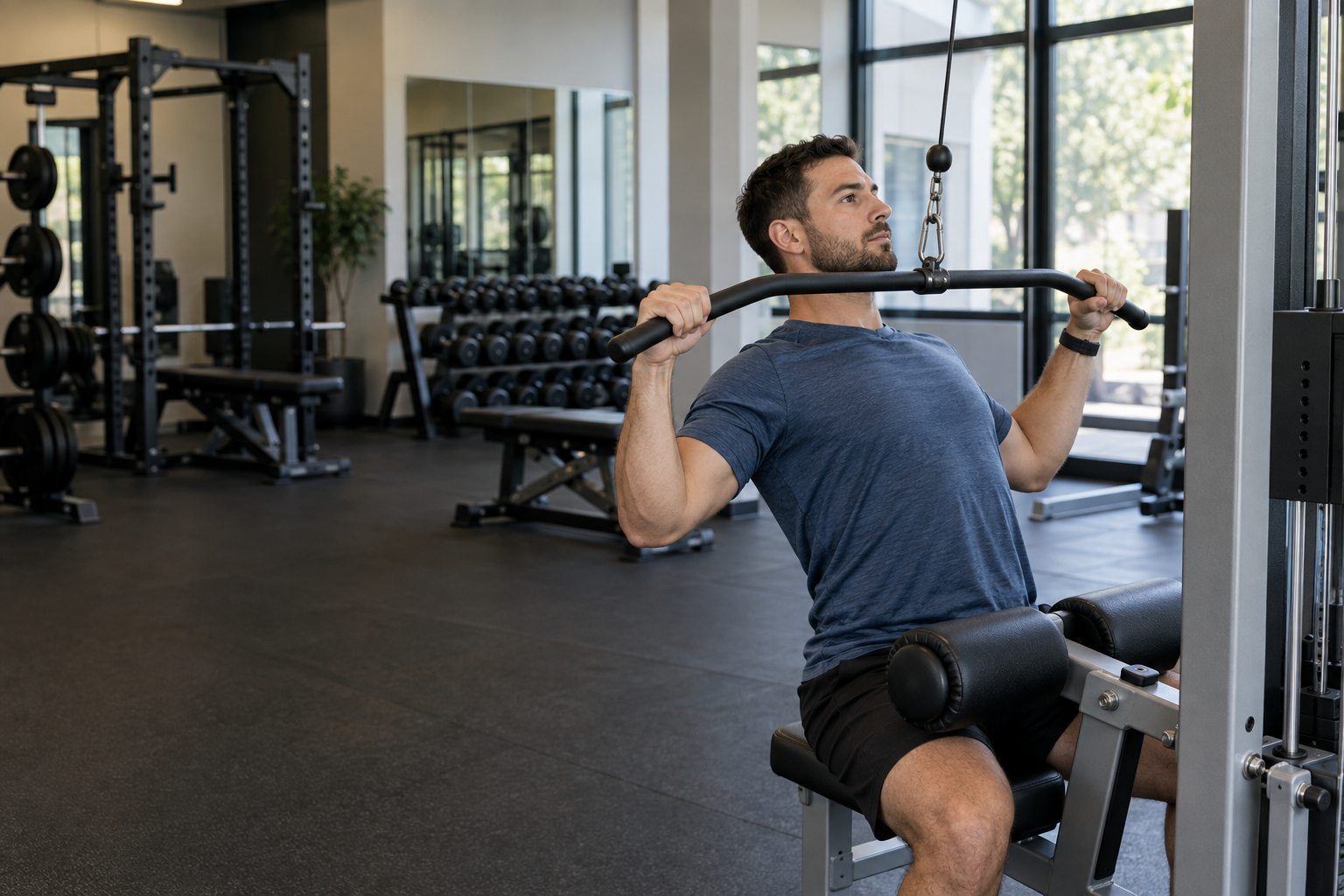
A lat pulldown is a common beginner-friendly vertical pull. The arms begin overhead and the elbows move down toward the sides.
Pull-ups are another vertical pattern, but they are not a beginner requirement. Assisted variations and pulldowns allow the movement to be trained with adjustable resistance.
Horizontal Pulling
A seated cable row, machine row, or dumbbell row pulls resistance toward the torso. Rows train the middle and upper back along with the arms.
Choose a stable variation first. A chest-supported or seated machine row can reduce the number of positions a beginner must manage.
Upper Back and Rear Shoulder Support
Face pulls, reverse fly variations, and rear-delt machines can provide supporting work around the upper back and rear shoulders.
Use light, controlled resistance. These movements should not become swinging contests or replace the primary pulls without a reason.
A Simple Beginner Back Workout
One example is three sets of lat pulldowns, three sets of seated cable rows, two sets of chest-supported or machine rows, and two optional sets of face pulls or reverse fly work.
This is general education, not individualized prescription. Warm up, use manageable resistance, and adjust the number of exercises to the rest of your program.
How Much Weight Should You Use?
Choose a load that allows a controlled pull and return without leaning dramatically or using momentum. Finish the set with some good repetitions still possible.
Increase gradually after the target repetitions are consistent. A heavier stack does not help if the intended movement disappears.
Think About Pulling With the Elbows
The hands connect you to the handle, but thinking about the elbows moving down or back can help reduce the urge to turn every pull into a curl.
Keep the cue simple. Grip, wrist position, and torso angle still matter, and qualified coaching can help if the movement remains confusing.
What If You Cannot Do Pull-Ups?
Use a pulldown or assisted pull-up that lets you practice the direction with suitable resistance. There is no need to force unsupported repetitions before you can control them.
Progress may include more reps, less assistance, or a slightly heavier pulldown over time.
Common Beginner Mistakes
Avoid pulling behind the neck, using excessive body swing, shortening every return, collecting several nearly identical rows, or assuming deadlifts are mandatory in every back workout.
A hip hinge can belong in a broader program, but back training can be useful without making it the center of this beginner session.
How to Run the Session
Warm up with easy movement and lighter practice sets on the first pull. Adjust the thigh pad and seat on the pulldown so you are stable without being pinned uncomfortably.
Perform the vertical pull, then a stable horizontal row. Notice the different elbow path rather than judging the exercise by where soreness appears. Add the second row and optional rear-shoulder work only if the session remains controlled.
Use straps or grip changes only when appropriate to your program and experience. Beginners usually benefit more from learning the basic handles and positions first.
Record seat settings, attachments, loads, and repetitions. Machine numbers vary between gyms, so compare progress on the same equipment whenever possible.
If grip or arms fatigue before the back, reduce the load and focus on controlled elbow movement. Qualified coaching can help with setup and cues.
Finish with enough energy to recover for the next planned session. A back workout does not need to leave every pulling muscle exhausted to be useful.
How to Know You Are Learning
The workout is becoming more familiar when you can adjust equipment quickly, control the return of each repetition, and use similar technique from the first set to the last.
Progress may appear as more repetitions, a small load increase, or less reliance on momentum at the same weight. All are useful when they are recorded honestly.
Continue practicing the main directions before seeking advanced variations. Skill with the basics makes later choices easier to evaluate.
Repeat Before You Reinvent
Use the same basic pulls long enough to learn setup and track progress. Record seat positions, attachments, loads, and repetitions when those notes are helpful.
Then make one change at a time for a clear reason. A repeatable workout teaches more than a new list every week.