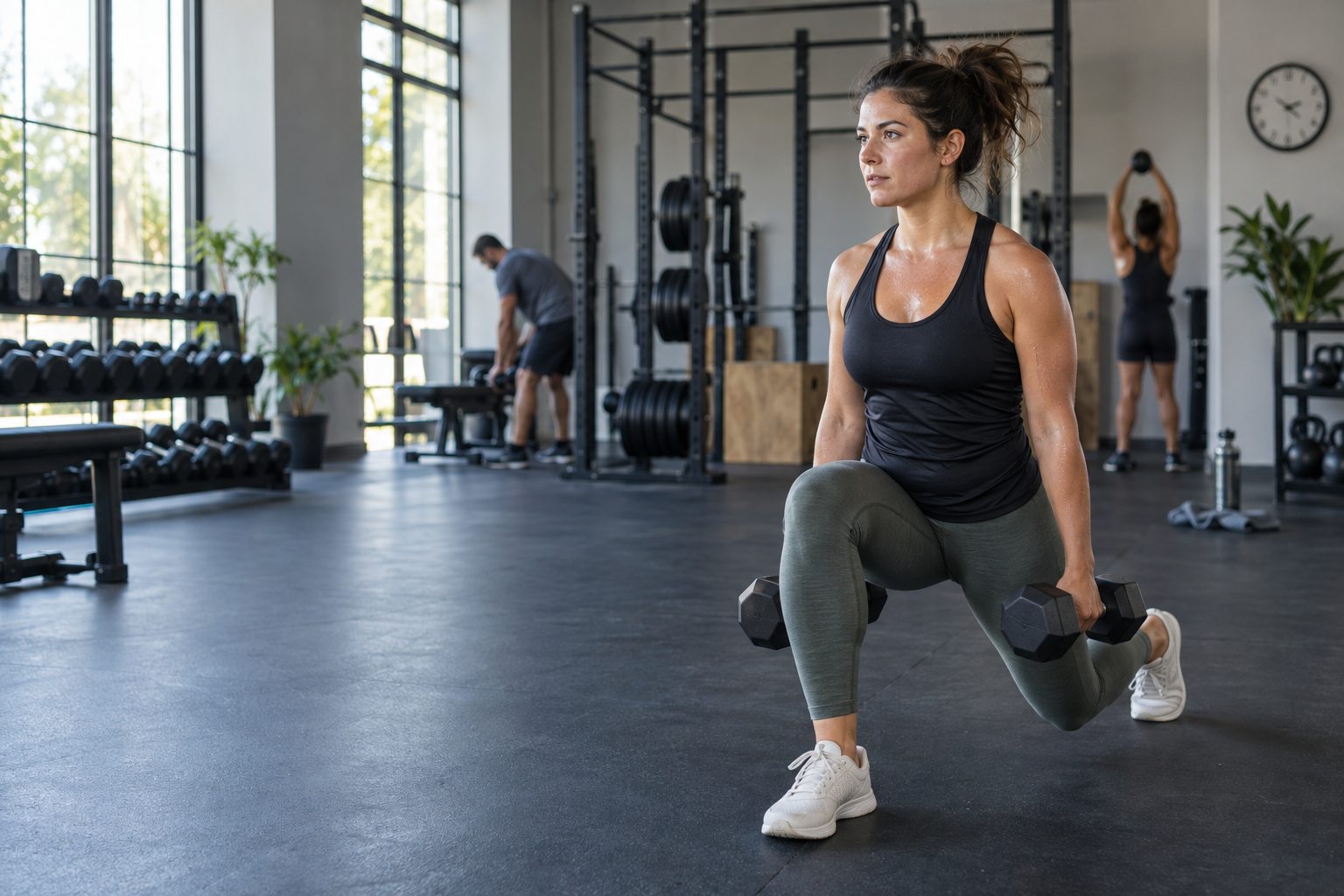
A focused short session can still be a useful session
Thirty Minutes Is Enough to Do Something Useful
A thirty-minute session cannot always replace every longer workout, but it can still provide meaningful training when it has a clear purpose. Short does not have to mean rushed, random, or careless.
The key is deciding what matters before the clock starts. A focused plan protects the session from searches, unnecessary setup, and extra exercises added without a reason.
The Clock Starts Before the First Set
Review the workout before arriving. Know the first exercise, locate likely equipment, and keep a backup movement available. If possible, arrive dressed and ready.
A few minutes of preparation outside the gym can preserve a meaningful portion of the time you have inside it.
Pick a Priority
A short workout works best with one main purpose: full-body strength, upper body, lower body, conditioning, or another focused goal. Trying to train everything equally can leave the session scattered.
Choose the most important movements first. Optional accessories belong later, where they can be shortened without removing the core of the workout.
Keep the Exercise List Focused
Three to five exercises are often more practical than a long list when time is limited. Select movements that contribute directly to the goal and avoid excessive transitions between distant stations.
Quality matters more than collecting exercise names. Controlled work on a concise plan is easier to track and repeat.
Control Rest Without Rushing
Rest should support the next set. Use a timer if you tend to lose track, but do not cut rest so aggressively that technique and performance collapse.
Supersets can save time when exercises and equipment pair sensibly, such as alternating noncompeting movements. They are a tool, not a requirement, and crowded spaces may make them impractical.
Have a Backup Exercise
Occupied equipment can consume a short session if you wait without a plan. Choose one reasonable substitution for each important movement.
Preserve the movement pattern and purpose when possible. A backup should keep the session moving, not change a lower-body workout into an unrelated collection of exercises.
A Sample 30-Minute Structure
Here is a general example, not an individualized prescription: spend about five minutes warming up; use twelve minutes for two primary movements; use eight minutes for two supporting movements; and keep five minutes for a brief finisher, cooldown, or transition time.
The exact sets, repetitions, and resistance depend on the workout and the person. The value of the structure is that every part of the half hour has a job.
What Not to Do
Do not spend ten minutes searching for the perfect routine, change exercises after every set, or add work simply because the session feels short. Avoid racing through unfamiliar movements with poor control.
Efficiency is not panic. It is removing low-value delay while keeping the work intentional.
Save the Workout for Next Time
If the session fits your schedule and equipment, save it. Record what you used and what needs adjustment. The second time becomes faster because the planning is already done.
FitForgeFlow's premade quick workouts and personal copies can help turn one successful short session into a dependable option.
Make the Session Fit the Day
A thirty-minute plan should account for the gym you actually use. If equipment is spread across multiple floors, select movements in one area. If peak hours make supersets impractical, use straight sets with controlled rest instead of occupying several stations.
Also decide what happens if you arrive with only twenty minutes. Keep the warm-up and highest-priority work, then remove optional pieces from the end. Avoid skipping preparation for a demanding movement simply to preserve an accessory exercise.
When the session is complete, record the duration as well as the work. Over several attempts, you will learn which combinations genuinely fit the window. That turns a rushed fallback into a reliable part of your training system.
Done Is Better Than Wandering
A clear thirty-minute workout is often more useful than an hour reserved for training but spent deciding what to do. Keep the priority visible, use reasonable rest, and finish on time.
The goal is not to pretend time does not matter. It is to make the time you have easier to use.