21s
Seven partial reps from the bottom, seven partial reps from the top, then seven full reps — 21 total reps in one continuous set.
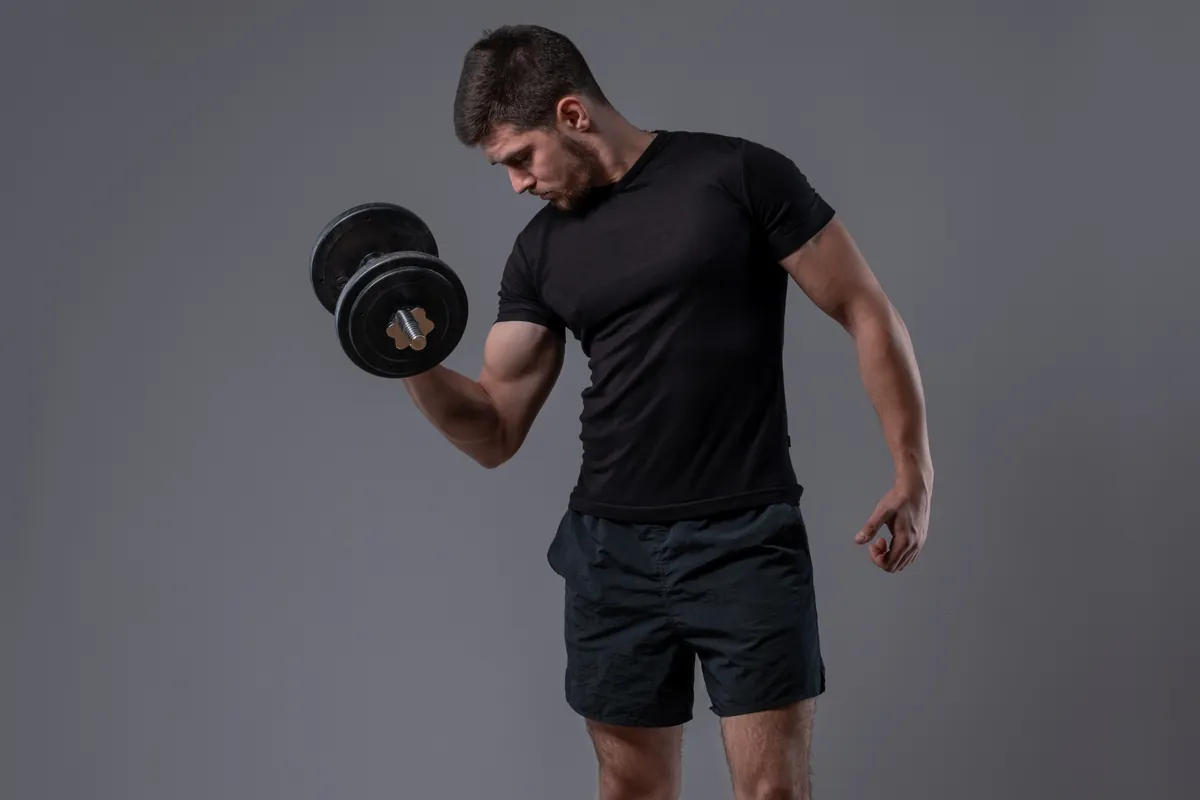
What are 21s?
21s split a single exercise into three 7-rep segments performed back-to-back without rest: 7 partial reps through the bottom half of the range of motion, 7 partial reps through the top half, then 7 full range-of-motion reps — 21 total reps in one continuous set.
Splitting the range of motion this way targets different parts of a muscle's strength curve and creates significant fatigue and muscle pump by the end of the full sequence.
How to structure 21s
Example 21s (bicep curl): 7 curls from the bottom to the midpoint, 7 curls from the midpoint to the top, then 7 full curls through the complete range — all without setting the weight down.
21s work best on single-joint, isolation exercises where partial-range reps are simple to execute with good control, like curls, lateral raises, or leg extensions.
Who 21s work well for
21s are popular as a finishing technique for isolation exercises, especially when the goal is muscle pump and time under tension rather than maximal strength.
Logging 21s in FitForgeFlow
Log the full 21-rep sequence as one set in FitForgeFlow — the total rep count and weight used are recorded together in your exercise history.